









What Is a Cloud Call Center?
A cloud-based call center (also known as cloud contact center) is a virtual, internet-based platform hosted by a third-party provider that enables agents to manage customer voice and digital interactions from anywhere, eliminating the need for on-premises hardware. These solutions leverage VoIP, offer high scalability, and integrate with CRMs to provide a unified, cost-effective customer service experience.
Key features:
- Automatic call distribution: Routes incoming calls to the most appropriate agent or department based on predefined rules, agent availability, or customer needs.
- Interactive voice response: Uses automated voice menus to help callers navigate support options and reach the correct department without manual assistance.
- Call recording and monitoring: Records customer conversations and allows supervisors to review calls for quality assurance, compliance, and agent training.
- Omnichannel support: Combines phone, SMS, email, and chat into one centralized dashboard.
- Real-time analytics and reporting: Provides live dashboards and performance metrics for call volumes, wait times, agent productivity, and customer satisfaction.
- AI and automation: Automates repetitive tasks, supports chatbots and virtual agents, analyzes customer interactions, and assists agents during live conversations.
How it works:
Cloud call centers operate using a third-party provider that manages the infrastructure. Agents connect via the internet, allowing for seamless, flexible operations that are often faster to deploy and more reliable than traditional systems.
This is part of a series of articles about call center solutions.
Benefits of Cloud Call Centers
Cloud call centers offer businesses a flexible and cost-effective way to manage customer communication. Because the infrastructure is hosted online, companies can deploy and manage call center operations without maintaining on-premises systems:
- Lower upfront costs: Businesses avoid investing in hardware, PBX systems, and server infrastructure. Most cloud call centers use a subscription-based pricing model, which reduces initial setup costs.
- Easy scalability: Companies can add or remove agents, phone lines, and features based on business needs.
- Remote work support: Agents can work from any location with an internet connection.
- Faster deployment: Cloud call centers can often be set up in days instead of weeks or months.
- Automatic updates and maintenance: Service providers handle software updates, security patches, and system maintenance.
- Omnichannel communication: Many platforms support voice, email, chat, and SMS, in one system.
- Improved reliability and disaster recovery: Cloud providers offer built-in redundancy and backup systems.
- Advanced analytics and reporting: Platforms include real-time dashboards, call analytics, and performance tracking tools.
- Integration with business tools: Cloud call centers integrate with CRM systems, help desk software, and business applications.
- Better flexibility for businesses: Organizations can customize features, routing rules, and workflows more easily than with traditional systems.
Key Cloud Call Center Features
1. Automatic Call Distribution
Automatic call distribution (ACD) routes incoming calls to the appropriate agent or department based on predefined rules. ACD systems distribute calls based on factors like agent skill set, call volume, time of day, or customer language preferences. This routing reduces wait times, improves first-call resolution rates, and directs inquiries to the right agent. Modern ACD solutions integrate with other tools, such as customer relationship management (CRM) systems.
Capabilities:
- Skill-based and priority-based routing
- Queue and overflow management
- Round-robin and least-idle routing
- VIP and customer segmentation routing
- Callback and virtual queue support
2. Interactive Voice Response
Interactive voice response (IVR) systems allow customers to interact with an automated menu using voice commands or keypad inputs before reaching a live agent. IVR collects information upfront, such as account numbers or issue types, so callers are directed to the right department or self-service options. Cloud-based IVR systems are easy to update, allowing businesses to modify scripts and flows without hardware changes. Advanced IVR can integrate with backend databases, enabling personalized responses or secure self-service transactions.
Capabilities:
- Multi-level voice and keypad menus
- Self-service for common requests
- CRM and backend system integration
- Natural language voice recognition
- Customizable call flows and prompts
3. Call Recording and Monitoring
Call recording and monitoring support quality assurance, compliance, and agent training. Cloud call centers can automatically record inbound and outbound calls, storing them in the cloud for retrieval. Supervisors can review recordings to assess performance, resolve disputes, or ensure compliance. Live monitoring allows managers to listen to active calls in real time, provide coaching, or intervene when necessary. Cloud-based storage and access controls help maintain security and meet regulatory requirements.
Capabilities:
- Automatic inbound and outbound call recording
- Live call monitoring and whisper coaching
- Call barging for supervisor intervention
- Searchable cloud-based recording storage
- Quality assurance scoring and evaluation
4. Omnichannel Support
Omnichannel support enables customers to interact across multiple channels, such as voice, SMS, email, and chat, while maintaining a unified experience. Cloud call centers consolidate these interactions into a single interface, giving agents a complete view of the customer journey. Customers can move between channels without repeating information. Omnichannel capabilities support consistent customer service across digital environments.
Capabilities:
- Unified inbox for voice and digital channels
- Shared customer interaction history
- Channel switching without losing context
- Consistent routing across communication channels
- Integrated messaging support
5. Real-Time Analytics and Reporting
Real-time analytics and reporting provide insights into call center operations, agent performance, and customer interactions. Platforms offer dashboards and customizable reports that track metrics such as call volume, average handle time, first-call resolution, and customer satisfaction scores. Supervisors can spot issues, such as long wait times or high abandonment rates, and take corrective action. Analytics also highlight areas where processes or training may need adjustment.
Capabilities:
- Live performance dashboards
- Customizable reports and KPIs
- Agent productivity tracking
- Queue and call volume monitoring
- Customer satisfaction and SLA reporting
6. AI and Automation
AI and automation support cloud call centers by improving workflows and customer interactions. AI-powered chatbots and virtual agents handle routine inquiries, allowing agents to focus on complex issues. Natural language processing helps bots understand and respond to requests in real time. Automation can log call details in CRM systems or trigger follow-up actions based on outcomes. AI-driven analytics provide predictive insights for staffing and customer trends.
Capabilities:
- AI chatbots and virtual agents
- Agent assist with real-time recommendations
- Automatic call summarization
- Sentiment and conversation analysis
- Workflow and CRM automation
How an Inbound Cloud Call Center Works
Step 1: The Customer Contacts the Call Center
A customer calls a business using its published support or service number. The cloud call center platform receives the call over the internet using VoIP and begins the configured inbound call flow. Because the telephony infrastructure is cloud-hosted, the call does not need to pass through an on-premises PBX system.
Step 2: The IVR Collects Information
The interactive voice response system presents menu options and asks the caller for information using keypad inputs or voice commands. It can collect details such as the reason for the call, preferred language, or account information. The IVR can also resolve supported requests through self-service without involving an agent.
Step 3: The ACD Routes the Call
If the customer needs an agent, the automatic call distribution system determines where to send the call. Routing rules can consider the selected IVR option, agent skills, availability, customer priority, language, or queue conditions. If no suitable agent is immediately available, the caller can remain in a queue or use a callback option.
Step 4: The Agent Receives Customer Context
When an agent becomes available, the platform connects the call and can display relevant information from integrated CRM or help desk systems. This may include the caller’s identity, account details, previous interactions, and information collected by the IVR. Providing this context reduces the need for customers to repeat information.
Step 5: The Agent Handles the Interaction
The agent communicates with the customer through the cloud call center interface. During the call, the platform can provide features such as real-time agent assistance, knowledge recommendations, sentiment analysis, or supervisor coaching. Supervisors can also monitor active calls or intervene when necessary.
Step 6: The Platform Records the Outcome
After the interaction, the platform can store the call recording, disposition, notes, transcript, and other interaction data according to configured policies. Automation can summarize the conversation, update CRM records, create follow-up tasks, or trigger workflows based on the call outcome.
Step 7: Analytics Update Call Center Metrics
Call and agent data feeds into reporting and analytics dashboards. The platform can track metrics such as call volume, wait time, abandonment rate, handle time, agent performance, and service levels. Supervisors use this information to monitor operations, identify bottlenecks, and adjust staffing or routing rules.
Related content: Read our guide to cloud contact center software
Cloud Call Center vs. Traditional Call Center
Cloud call centers differ from traditional call centers in infrastructure, scalability, and flexibility. Traditional call centers rely on on-premises hardware, dedicated phone lines, and in-house IT support, which increases setup and maintenance costs. Upgrades or expansions require investment and longer deployment timelines.
Cloud call centers operate online, with the provider handling infrastructure, updates, and maintenance. Businesses can add or remove agents, update features, and deploy services quickly. Cloud call centers also support remote work.
Related content: Learn more in our guide to contact center as a service (CCaaS).
Types of Cloud Call Centers
Inbound Cloud Call Center
An inbound cloud call center handles incoming customer calls related to support, billing questions, appointment scheduling, or general inquiries. Inbound cloud call centers are commonly used by customer support teams, healthcare providers, retailers, and service-based businesses. Agents can work remotely through cloud-based platforms without requiring on-site phone infrastructure.
Cloud-based inbound call centers use automatic call distribution (ACD), interactive voice response (IVR), and call queuing to manage high volumes. Agents can access customer information through integrated CRM systems. Businesses can scale operations during peak periods and support remote agents without additional hardware.
Outbound Cloud Call Center
An outbound cloud call center focuses on making outgoing calls for sales, lead generation, follow-ups, appointment reminders, market research, or debt collection. These systems help organizations automate outbound communication campaigns and improve agent productivity.
Cloud outbound call centers include automated dialers, call scripting tools, and campaign management features. Predictive and power dialers place calls and connect agents when someone answers. Managers can monitor campaign performance using analytics and reporting tools.
Blended Cloud Call Center
A blended cloud call center combines inbound and outbound operations within a single platform. Agents handle incoming support calls and make outbound calls as needed. This model helps maximize agent utilization while maintaining flexibility during changing call volumes.
Businesses can shift resources between inbound and outbound activities based on call volumes. Reporting and workforce management tools allow supervisors to monitor both interaction types from one system.
AI-Powered Cloud Call Center
An AI-powered cloud call center uses artificial intelligence and automation to support customer service operations and agent productivity. AI tools automate routine tasks, analyze interactions, and provide real-time assistance. Features include chatbots, virtual agents, speech analytics, sentiment analysis, and intelligent call routing.
These systems handle repetitive requests without human involvement and assist agents during live calls by suggesting responses or retrieving information. AI-powered cloud call centers also use machine learning to identify customer behavior patterns, forecast support demand, and improve routing accuracy.
Related content: Read our guide to AI call center software.
Who Should Use a Cloud Call Center?
eCommerce Companies
eCommerce companies use cloud call centers to manage support, order inquiries, returns, and delivery issues across channels. Cloud platforms scale during seasonal spikes such as holiday sales. Integration with ecommerce platforms and CRM systems gives agents access to order histories and customer details.
Cloud call centers also help eCommerce businesses maintain consistent customer communication across multiple sales channels and marketplaces. Automated notifications, outbound messaging, and self-service tools improve order tracking, delivery updates, and return management while reducing the workload on support agents.
SaaS Companies
SaaS companies use cloud call centers for technical support, onboarding, account management, and customer success. Cloud call centers integrate with help desk software, CRM platforms, and ticketing systems. Agents can access usage data, support history, and subscription details during interactions.
SaaS providers benefit from cloud call centers by improving customer retention and subscription management workflows. Automated routing and integrated customer records help support teams prioritize urgent technical issues, monitor service-level agreements, and deliver faster resolution times for enterprise and self-service users.
Healthcare Providers
Healthcare providers use cloud call centers for appointment scheduling, billing inquiries, prescription requests, and telehealth support. Many platforms offer compliance and security features that support regulations such as HIPAA. Features like call recording, secure data storage, and role-based access controls help protect patient information.
Healthcare organizations use cloud call centers to improve patient communication and operational coordination across departments. Features such as automated appointment reminders, queue management, and multilingual support help reduce administrative workloads and improve patient accessibility and response times.
Financial Services
Financial services organizations use cloud call centers to support banking customers, insurance policyholders, investment clients, and loan applicants. Cloud call centers provide security features such as encrypted communications and compliance tools. Analytics and fraud detection tools help monitor suspicious activity.
Cloud call centers allow financial service providers to support customers across voice, messaging, and digital channels while maintaining centralized oversight. Automated workflows and intelligent routing help manage high inquiry volumes efficiently, especially during fraud investigations, claims processing, and account verification procedures.
Notable Cloud-Based Call Center Solutions
Messaging-Led and Omnichannel Communication Platforms
1. Call Center Connect by MMDSmart

Call Center Connect is a cloud-based call center platform built by MMDSmart, a telecom transit operator, for businesses, BPOs, and global teams managing high-volume inbound and outbound voice operations. The platform removes hardware and geographic constraints while delivering carrier-grade international call quality through direct network routing, and it integrates with the MessageWhiz omnichannel platform to combine voice and messaging in a single workflow.
Key features include:
- Carrier-grade call quality: Operates as a telecom transit operator with direct routing control, delivering more reliable international calling than reseller-based platforms.
- Browser-based agent workspace: No hardware or desk phones required; agents dial through a built-in WebRTC dialer, with SIP phone and SIP trunk support for teams integrating existing telephony infrastructure.
- Live supervision and control: Supervisors monitor calls in real time and step in using spy, whisper, or barge-in modes.
- Inbound and outbound campaign tools: Automatic and manual dialing, IVR, robo-calls, voicemail drop, and DID-based inbound routing through ring groups.
- Real-time and historical analytics: Tracks ASR, ACD, disconnect reasons, and call volume, with drill-down by agent, campaign, country, ring group, or call type.
- AI-powered insights: Real-time sentiment analysis during calls plus post-call transcripts with sentiment context for coaching and QA.
2. Twilio Flex

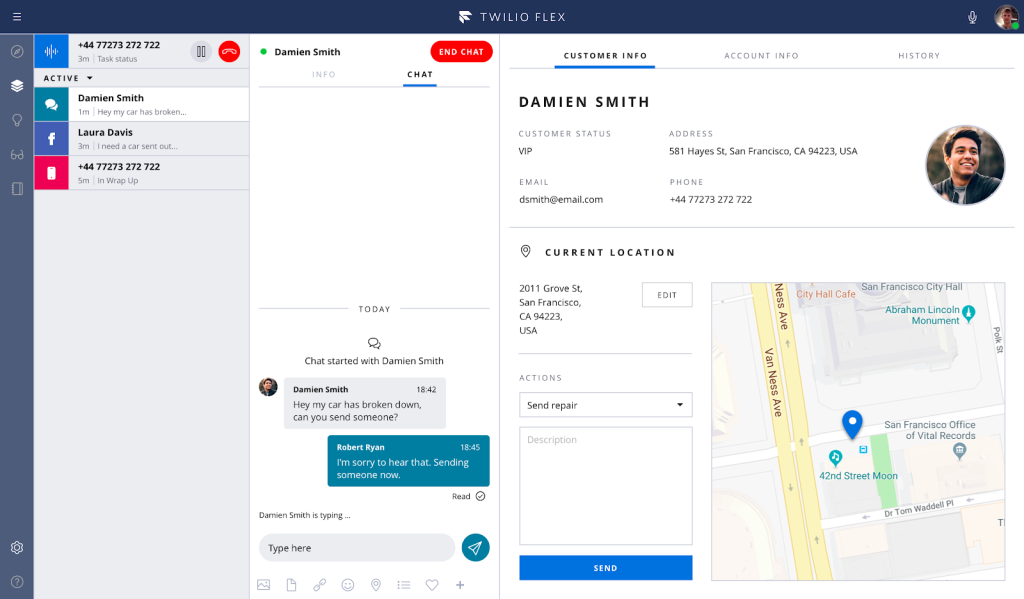
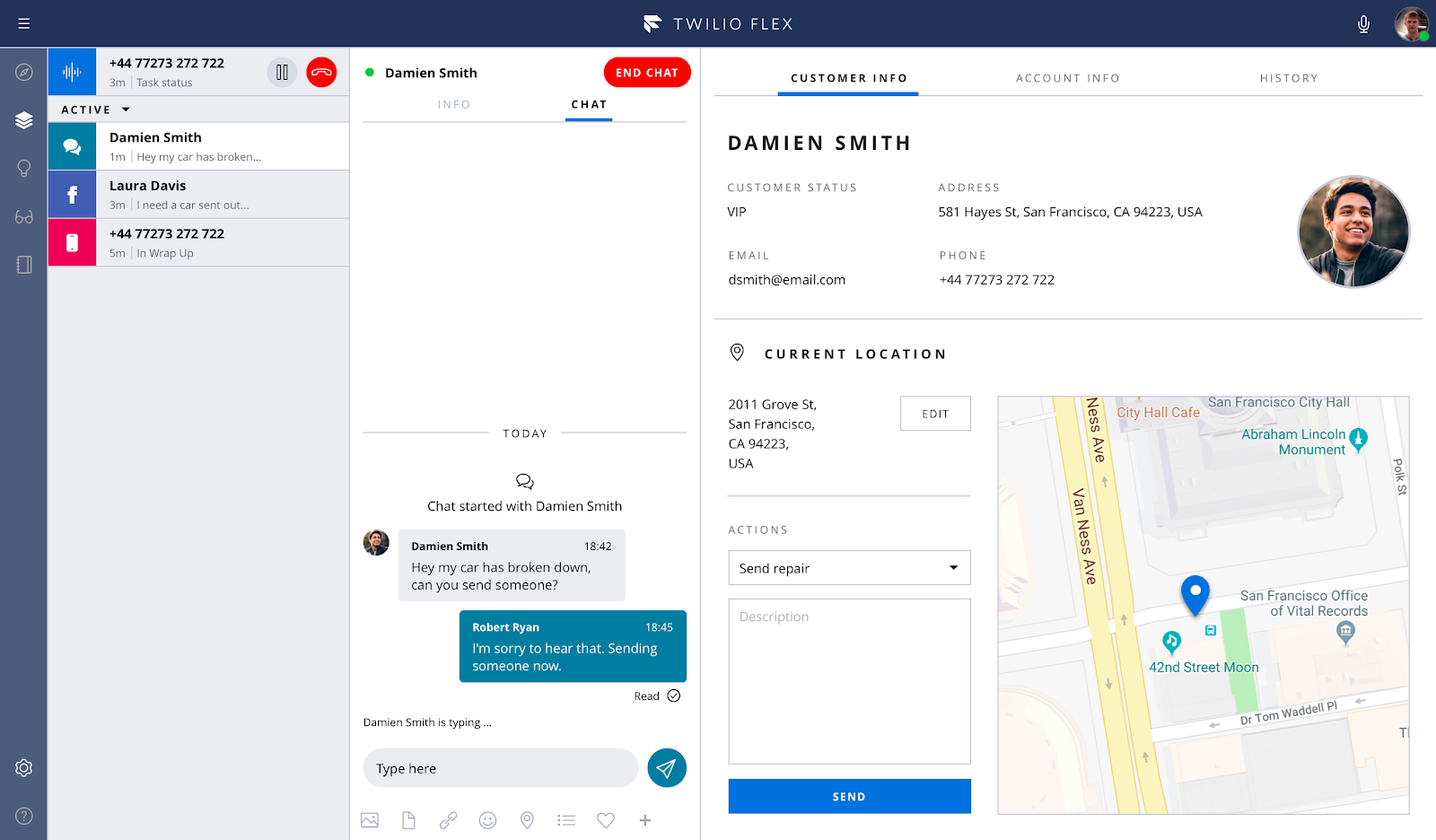
Twilio Flex is a cloud-based contact center platform for businesses that want to combine voice, messaging, AI, and human support in a customizable system. Twilio Flex allows businesses to embed communication channels such as voice, SMS, WhatsApp, and email into existing applications and workflows. The platform supports inbound and outbound interactions while maintaining conversation history and customer context across channels.
Key features include:
- Omnichannel communication: Supports voice calls, SMS, WhatsApp, email, and other messaging channels within a single platform.
- Connected customer journeys: Maintains conversation history and customer context across channels.
- Unified agent workspace: Provides a centralized interface to manage interactions.
- AI and human collaboration: Combines AI-powered automation with live agents.
- Automated self-service: Uses AI-driven virtual agents to handle routine inquiries.
Source: Twilio
3. Zendesk Contact Center

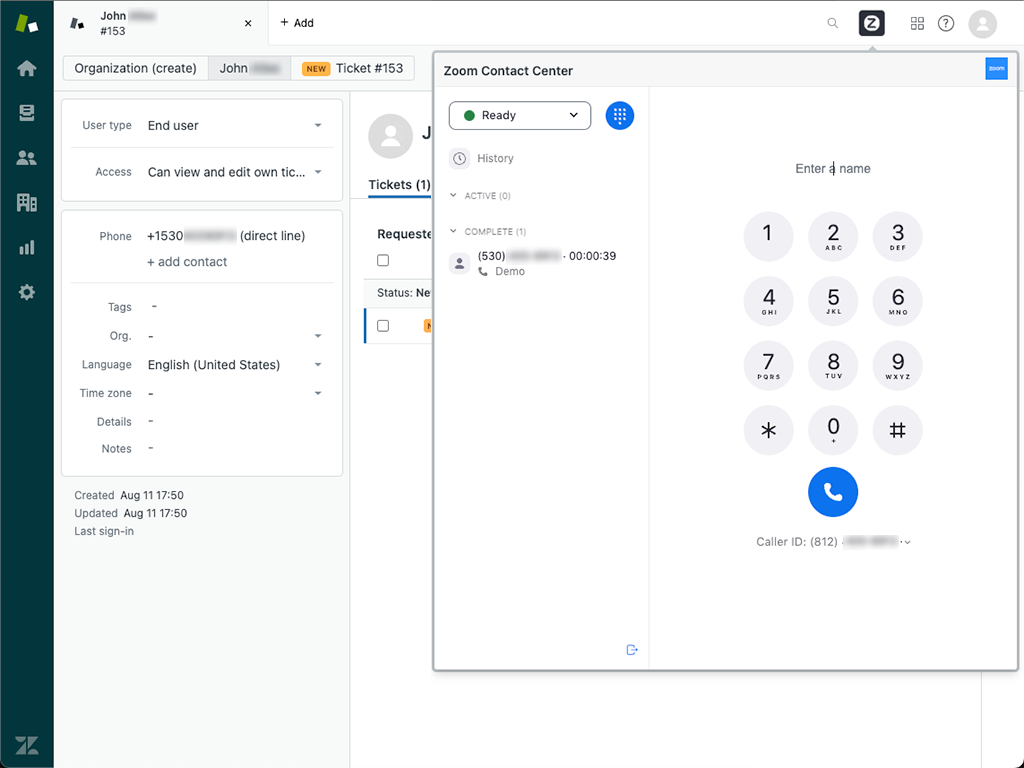
Zendesk Contact Center is an AI-powered contact center platform built on Zendesk’s Resolution Platform. It combines voice support, AI automation, agent assistance, analytics, and omnichannel service within a cloud-based system. The platform removes the need for middleware and disconnected systems.
Key features include:
- AI-powered contact center: Uses built-in AI to automate service workflows.
- Unified resolution platform: Combines contact center tools and AI capabilities within a single platform.
- No middleware requirements: Removes the need for middleware and legacy systems.
- Omnichannel support: Supports interactions across voice and digital channels with shared context.
- Enterprise voice infrastructure: Uses AWS infrastructure for voice communication.
Source: Zendesk

Enterprise Cloud Contact Center Platforms
4. Five9
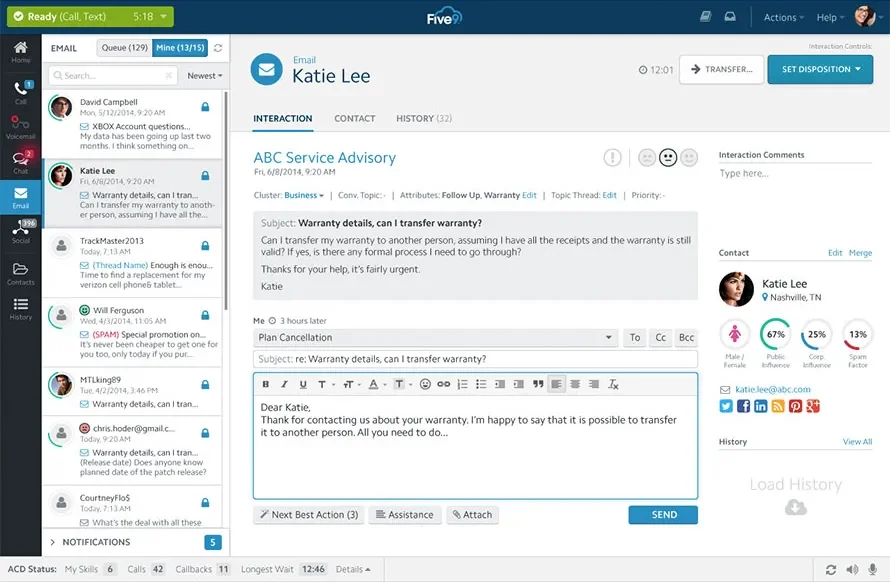
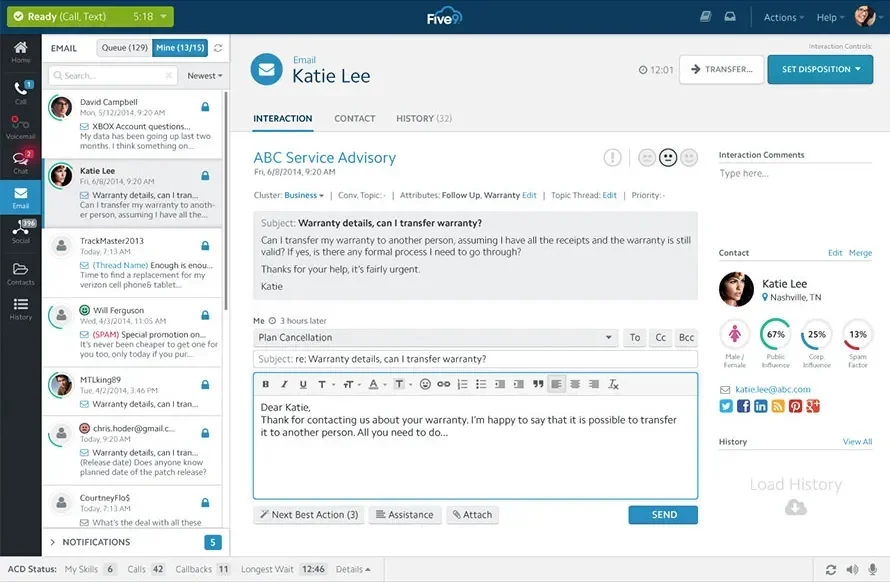
Five9 is a cloud-based contact center platform focused on AI-powered customer experience (CX) through automation and human-assisted support. The platform combines AI agents, workforce engagement tools, omnichannel communication, and customer journey orchestration within a cloud infrastructure. Five9 uses Genius AI technology to automate interactions and support live agents.
Key features include:
- AI-powered customer experience platform: Uses Five9 Genius AI to automate interactions.
- Agentic CX model: Combines AI agents and human agents.
- Omnichannel customer support: Supports interactions across voice and digital channels.
- Customer journey orchestration: Coordinates interactions across the customer journey.
- AI-driven automation: Automates routine customer service tasks.
Source: Five9
5. Genesys Cloud CX
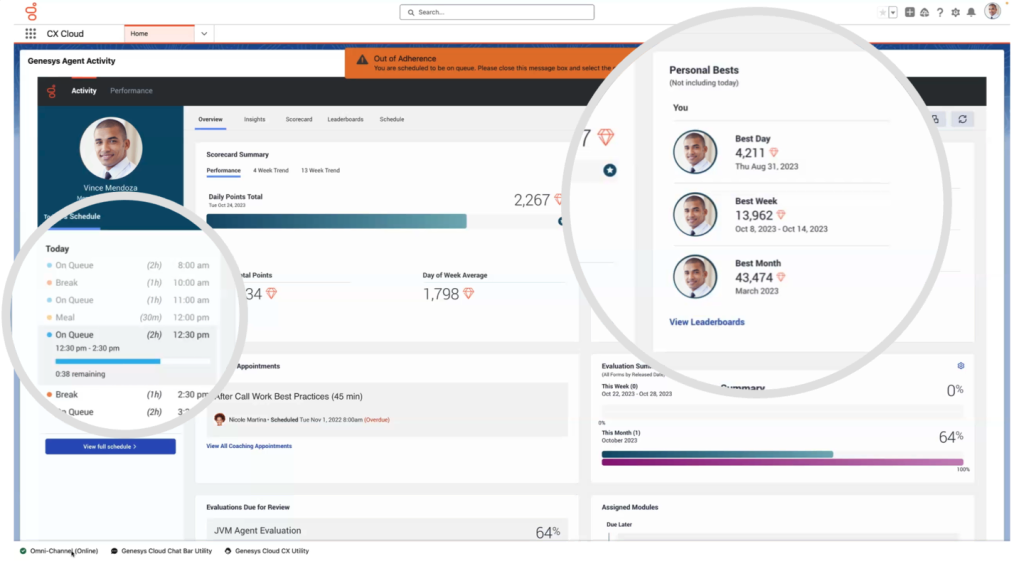
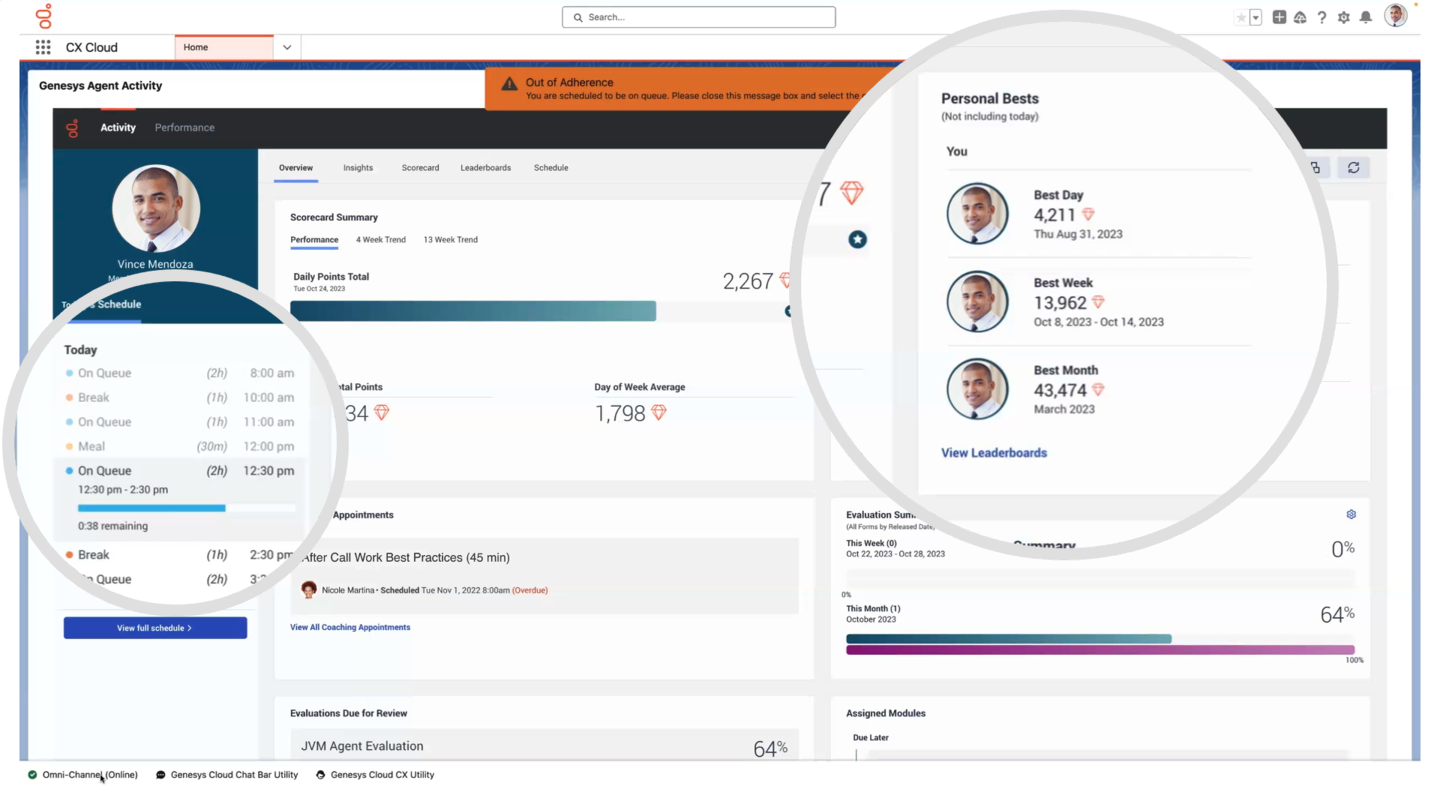
Genesys Cloud CX is a cloud-based contact center platform that combines AI-powered customer engagement, workforce management, analytics, automation, and omnichannel communication within a Contact Center as a Service (CCaaS) solution. The platform includes tools for voice, digital communication, customer journey orchestration, AI-powered automation, predictive engagement, and workforce collaboration.
Key features include:
- AI-powered CCaaS platform: Combines engagement, automation, analytics, and workforce management in a cloud-based contact center platform.
- Omnichannel customer engagement: Supports voice, email, live chat, SMS, social media, and digital channels.
- Personalized customer experiences: Supports connected interactions across the customer journey.
- Automatic call distribution (ACD): Uses skills-based routing to connect customers with suitable agents.
- Interactive voice response (IVR): Provides self-service phone experiences.
Source: Genesys
6. CXone

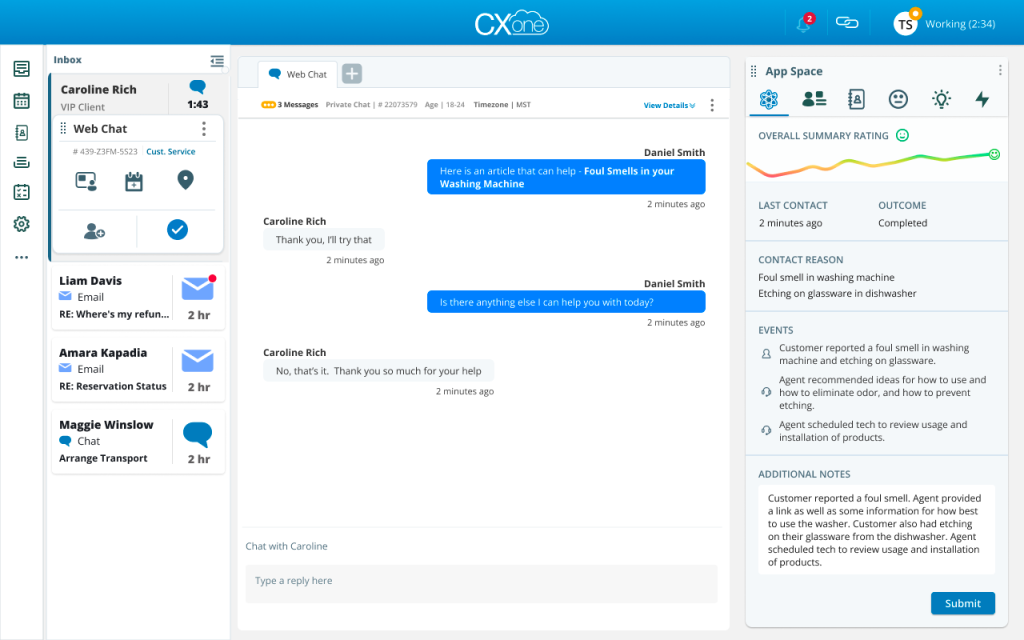
NICE CXone is a cloud-based contact center platform for managing interactions across voice and digital channels using AI-powered automation, routing, analytics, and workforce engagement tools. The platform combines automatic call distribution (ACD), interactive voice response (IVR), AI-driven agent assistance, journey orchestration, and workforce management within a cloud-native system.
Key features include:
- Cloud-based contact center platform: Provides a cloud-native system for managing interactions across voice and digital channels.
- AI-powered customer experience: Uses Enlighten AI and automation tools for customer experience operations.
- Automatic call distribution (ACD): Routes calls to suitable agents.
- Interactive voice response (IVR): Handles call volumes through automated workflows and routing.
- Omnichannel communication: Supports more than 30 voice and digital channels within one platform.
Source: NICE

Conclusion
Cloud call centers give organizations a flexible way to manage customer communications without maintaining on-premises infrastructure. By combining cloud-based telephony with features such as intelligent call routing, IVR, omnichannel support, AI-powered automation, analytics, and CRM integrations, they help businesses improve customer service while supporting remote work and scalable operations. As customer expectations continue to evolve, cloud call centers enable organizations to deliver faster, more personalized, and more consistent support while adapting quickly to changing business needs.