







You segment an audience, pick the right moment, and choose the channel that should land best, whether that’s SMS, RCS, email, WhatsApp, Viber, or a voice call. Then the campaign runs through different tools, different vendors, and different reliability records. The strategy was sound. The infrastructure underneath it wasn’t very efficient.
Why does running SMS, email, and voice through separate, siloed tools slow you down?
Separate tools mean separate logins, separate reporting, and separate points of failure and in many cases customer amnesia. When your CRM, your AI agents, or other management systems need to trigger a message, there’s no shared view of what a customer received, when they received it, or whether the message even arrived, and if and how they responded. For an agency or brand running campaigns across multiple client accounts, that fragmentation turns channel selection into a technical headache instead of a strategic choice.
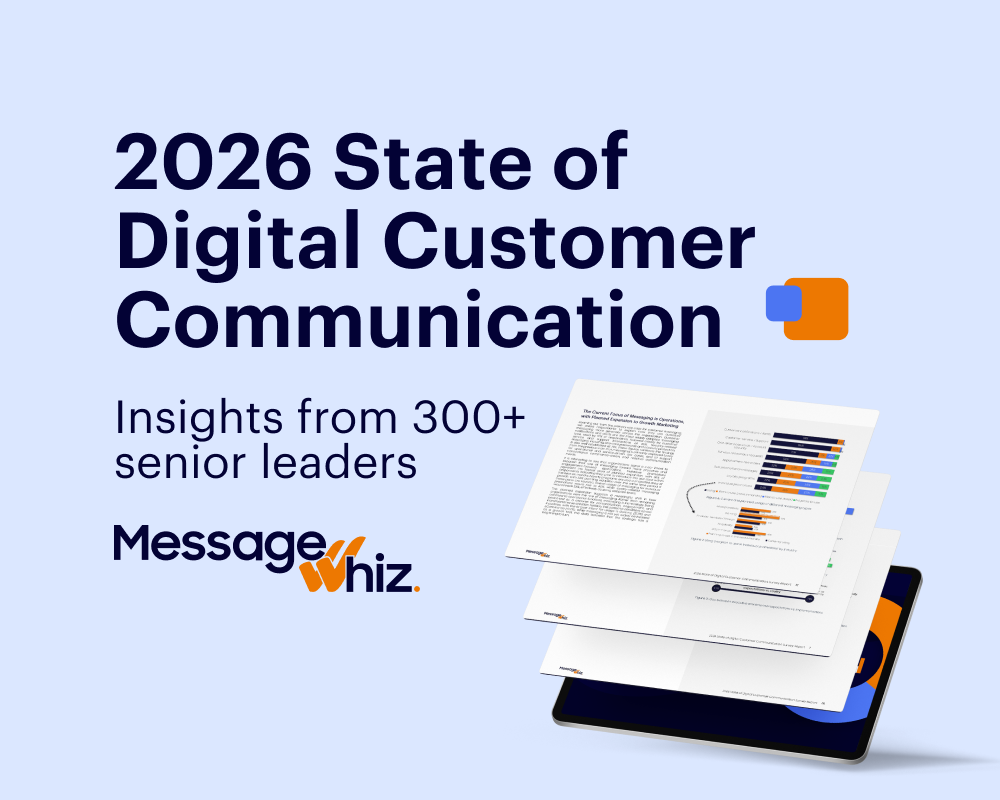
Most companies talk about reaching customers across channels, but few actually do it. According to MMDSmart’s 2026 State of Digital Customer Communication Survey, 57% of companies rely on only two channels for their outreach, usually email and SMS, even when their customers are just as reachable through an interactive WhatsApp message, an RCS message, or a voice call. If you’re only using two channels, you’re guessing that every customer prefers the same two, and for an audience spread across iGaming, retail, or sports brands, that guess rarely holds up.
What happens when message delivery reliability varies by channel or region?
Inconsistent message delivery shows up exactly where you can least afford it. A one-time password that lands late, a transactional alert that never arrives, or a campaign send that gets stuck in one region can undercut an entire retention strategy, even when the targeting and timing behind it were right.
An 80% delivery rate might look acceptable in a report. In practice, it means one in five messages either never reaches the customer or arrives too late to matter.
How does a CPaaS platform give you one view of every channel?
The fix isn’t adding a new tool. It’s connecting the channels your business uses through one solution so you can trigger the right channel programmatically, based on your needs, and easily manage and analyze for best results. MMDSmart MessageWhiz gives you that API to leverage a unified CPaaS platform for SMS, RCS, WhatsApp, Viber, Telegram and email, with Call Center Connect handling voice initiatives inside the same ecosystem. Templates and recipient lists live in one place. Word spinners and test sendouts let you validate message quality before anything goes live. Per-team API keys keep client environments separated within the same account. Channel selection becomes a decision about what fits the moment, not a decision about which vendor’s dashboard you have to open.
CRM Mine: A CRM automation agency that unified their communication channels
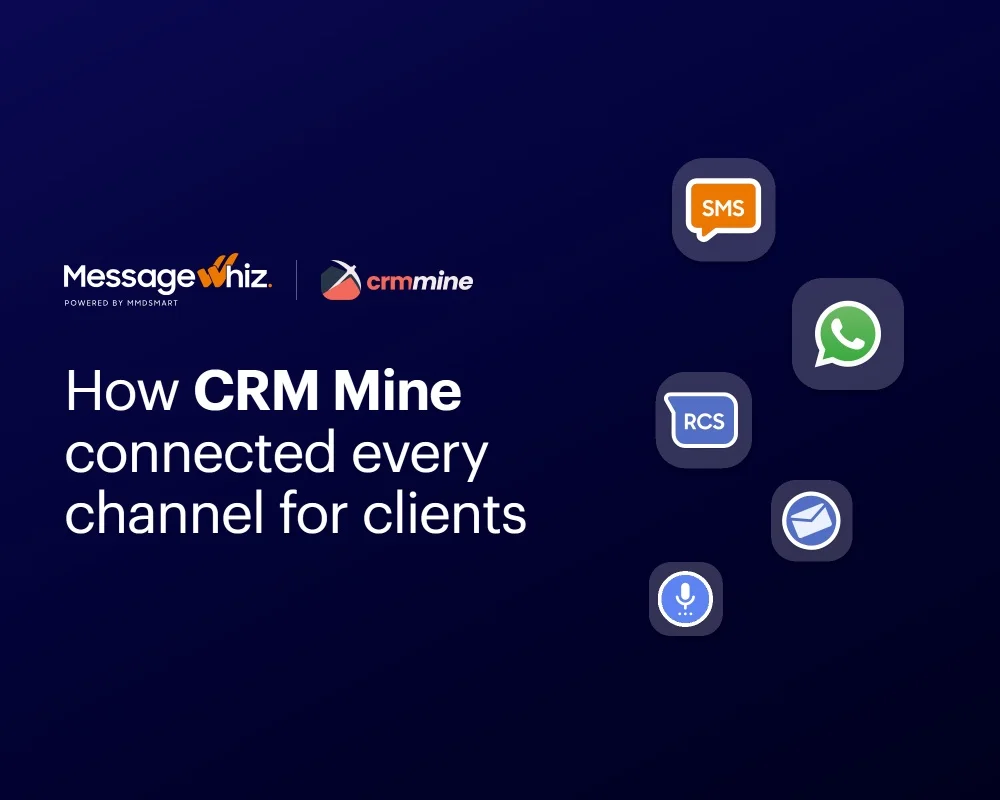
CRM Mine, a CRM automation and retention agency serving iGaming, retail, and sports brands, was running SMS, email, and voice through separate tools with an 80% delivery rate weighing down client results. They moved SMS and email onto MMDSmart MessageWhiz and brought voice onto Call Center Connect, consolidating three channels under one partner – MMDSmart.
That architectural simplicity had a direct operational benefit. When a campaign calls for SMS, they route it through the same provider they use for email or voice. Channel selection has become a strategic decision, not a technical one.
The case study also points to a wider industry pattern worth noting on its own:
Brands with strong omnichannel engagement retain an average of 89% of their customers, compared with 33% for those relying on a single channel.
For an agency whose value to clients depends on lifetime customer value, that gap is the reason channel reliability can’t be treated as a background detail.
If you’re managing campaigns across SMS, email, and voice through separate vendors, download the CRM Mine case study to see what changes when all three run through one platform instead.
Download the CRM Mine Case Study →
Banner: One platform. Every channel. Zero fragmentation.
FAQ: Integrating SMS, Email, and Voice for Campaign Management
What are the business benefits of integrating multiple channels into one platform?
You get one login, one reporting view, and one point of accountability instead of three. When your CRM, AI agents, or other management systems trigger a message, you can confirm what sent and when without checking multiple vendor dashboards, which saves your team time and removes the guesswork from channel selection.
Does consolidating channels mean giving up channel-specific tools?
No. You still get templates, recipient lists, word spinners, and test sendouts to validate message quality before anything goes live. MMDSmart MessageWhiz handles SMS and email, with Call Center Connect covering voice, so you keep the tools you need without maintaining a separate build for each channel.
What role does channel reliability play in overall campaign performance?
Even the best-targeted campaign depends on the message actually arriving on time. If delivery is inconsistent across channels, the timing and personalization behind your strategy stop mattering, since a customer can’t respond to a message they never received.
What should you look for when evaluating a unified communications platform?
You want a single API that can trigger SMS, email, and voice based on your own logic, along with shared reporting so you can confirm delivery across every channel from one place. Without that, you end up managing reliability channel by channel instead of as a whole system.
Is it worth switching from multiple messaging vendors to one integrated platform?
If you’re spending time reconciling delivery data across separate tools or losing customers to messages that never arrive, the switch usually pays for itself. The savings come from fewer logins to manage, less time spent troubleshooting delivery gaps, and a clearer view of what’s actually reaching your customers.