









TL;DR: CPaaS platforms with analytics reporting embed messaging, voice, and video while tracking delivery and engagement. Best for multi-channel analytics: MessageWhiz; global scale: Infobip; developer builds: Twilio; carrier-grade voice: Bandwidth.
What Are CPaaS Platforms?
CPaaS (Communications Platform as a Service) with built-in analytics allows businesses to embed voice, video, and messaging into their apps while tracking performance. Top platforms provide real-time dashboards to monitor delivery rates, message clicks, and customer sentiment. This helps teams optimize costs and fix dropped calls.
By using APIs, CPaaS providers abstract the complexity of global carrier integrations, protocol management, and scalability concerns, allowing developers to rapidly deploy communication capabilities that would otherwise require extensive engineering and maintenance. This approach reduces time-to-market and operational overhead for businesses looking to enhance user engagement.
CPaaS platforms support a variety of channels, including SMS, MMS, voice calls, video conferencing, and sometimes even social messaging apps. They are widely adopted in sectors like healthcare, finance, retail, and logistics for use cases ranging from appointment reminders to multi-factor authentication. Most CPaaS offerings are pay-as-you-go, enabling organizations to scale usage as needed without significant upfront investments. The flexibility and reliability of CPaaS make it a foundational technology for modern, integrated digital experiences.
Why Analytics Reporting Matters in CPaaS
Analytics reporting helps teams understand how communication workflows perform across channels. It turns raw delivery events, call records, and engagement data into useful signals for improving reliability, cost, and user experience.
- Delivery visibility: Reports show whether messages, calls, or notifications were delivered, failed, delayed, or blocked, which helps teams detect carrier issues, invalid numbers, routing problems, and regional failures.
- Performance optimization: Analytics can show response rates, delivery latency, call completion rates, and drop-off points, allowing teams to use this data to improve message timing, retry logic, and channel selection.
- Cost control: CPaaS usage can grow quickly across SMS, voice, video, and messaging apps, so reporting helps track spend by channel, country, campaign, or application to reduce waste and avoid unexpected costs.
- Compliance and auditing: Many industries need records of communication activity, and analytics reports support audit trails, consent tracking, delivery logs, and internal reviews.
- Better customer experience: By measuring engagement and failures, organizations can identify where users miss important updates or abandon communication flows to improve reminders, authentication, alerts, and support interactions.
CPaaS Platforms with Analytics Reporting: Top Vendors at a Glance
The table below summarizes the key differences between these platforms, including what each is best suited for and the main points to weigh. We explore each one in more detail in the sections that follow.
The table below summarizes the key differences between the platforms covered in this guide. We explore each one in more detail in the sections that follow.
| Category | Solution | Best For | Key Strengths | Analytics Reporting Features |
| Omnichannel Messaging & Engagement | MessageWhiz | Omnichannel business messaging with client-level reporting | Unified SMS, WhatsApp, RCS, email and voice with smart routing | Client-level consumption, delivery and engagement reporting with event subscriptions and real-time alerts |
| Omnichannel Messaging & Engagement | Infobip | Platforms and enterprises scaling omnichannel messaging | Unified Messages API, 800+ carrier links, fraud detection | Per-client, use-case and resource reports; delivery-report event subscriptions; proactive traffic analysis |
| Omnichannel Messaging & Engagement | Sinch | Omnichannel messaging across 14 channels via one API | 14 channels, automatic fallback, AI Smart Conversations | Built-in dashboard for traffic, delivery, cost per channel and country, and geographic insights, with CSV export |
| Developer-First Communications APIs | Twilio | Developers building programmable multichannel messaging | Broad APIs, verified routing, Fraud Guard | Messaging Insights dashboards for delivery and errors, click tracking, and OTP conversion |
| Developer-First Communications APIs | Vonage | Programmable reporting across voice and messaging | Voice, video and messaging APIs on a global network | Reports API with up to 13 months of data, filters, JSON/CSV exports, CDRs and BI integration |
| Developer-First Communications APIs | Plivo | Reliable, cost-focused SMS and verification at scale | Direct carrier network, ML fraud screening | Engagement analytics for open, click and conversion rates, A/B testing and campaign reporting |
| Developer-First Communications APIs | Telnyx | Carrier-owned SMS with detailed delivery reporting | Owned network, automated optimization | Delivery reports, message deliverability dashboard, usage reports and message detail records |
| Developer-First Communications APIs | Bandwidth | Enterprises on an owned network needing deep insights | Owned network, emergency and authentication APIs | Bandwidth Insights for delivery and error rates, latency, voice quality and anomaly detection |
Key Metrics CPaaS Analytics Platforms Should Report
Delivery and Reliability Metrics
Delivery and reliability metrics are fundamental for assessing whether messages, calls, or other communications reach their intended recipients promptly and without errors. Metrics such as delivery rate, latency, message queue times, and failure reasons help organizations pinpoint network or carrier issues that may affect communication reliability. Monitoring these indicators enables teams to address problems before they escalate, maintaining high service levels and user trust.
In addition to basic delivery statistics, advanced platforms may provide breakdowns by geography, carrier, or message type, revealing patterns that can guide routing and redundancy strategies. For mission-critical applications, tracking retry attempts and fallback success rates can highlight opportunities to optimize workflows and minimize downtime. Consistent focus on delivery and reliability metrics is essential for sustaining high-quality user interactions and meeting service-level agreements (SLAs).
Message Latency
Message latency measures the time it takes for a message to move through the communication pipeline, from the moment an application sends it until the recipient receives it. Reporting should include average, median, and percentile latency, since averages alone can hide intermittent delays. Breaking latency down by country, carrier, message type, or provider helps teams identify where delays occur.
Latency trends are especially important for time-sensitive workflows such as one-time passwords, fraud alerts, and critical notifications. Historical reporting and real-time monitoring allow teams to detect performance regressions, validate routing changes, and confirm that service-level objectives are being met.
Engagement Metrics
Engagement metrics show how recipients interact with communications after successful delivery. Depending on the channel, this may include open rates, link clicks, replies, call answer rates, call duration, video session participation, and user actions triggered by notifications. These metrics help determine whether communications achieve their intended outcome rather than simply reaching the recipient.
Analytics should also connect engagement data to campaigns, workflows, or customer segments. This allows organizations to compare channel effectiveness, optimize message content and timing, and identify communication flows with low completion or response rates.
Channel Performance
Organizations often use multiple communication channels, including SMS, voice, email, push notifications, WhatsApp, and other messaging platforms. Analytics should compare performance across these channels using consistent metrics such as delivery rate, latency, engagement, and failure rate. This helps teams select the most reliable and cost-effective channel for each use case.
Channel reporting should also highlight fallback behavior when a primary channel fails. For example, if an SMS cannot be delivered, the platform can report whether a voice call or push notification succeeded instead. These insights help improve communication reliability while reducing unnecessary retries.
Cost and Usage Metrics
Cost and usage reporting provides visibility into how communication resources are consumed across applications, teams, campaigns, and geographic regions. Useful metrics include message volume, call minutes, video usage, API requests, and total spend by channel. Granular reporting makes it easier to identify unexpected usage spikes and allocate costs accurately.
Platforms should also provide historical trends, budget tracking, and usage forecasts. Combined with performance metrics, cost reporting helps organizations balance reliability with efficiency by identifying expensive routes, underused channels, and opportunities to reduce communication costs without affecting service quality.
Related content: Read our guide to CPaaS solutions
Core Capabilities of CPaaS Platforms with Analytics Reporting
Real-Time Dashboards
Real-time dashboards provide an up-to-date view of communication activity across messaging, voice, video, and other supported channels. Teams can monitor delivery status, failures, latency, throughput, and traffic volume as events occur. This allows operations teams to detect incidents quickly and respond before they affect large numbers of users.
Effective dashboards support filtering by application, region, carrier, channel, or time range. They should also include configurable alerts and visualizations that make it easy to identify trends, spikes in failures, or unusual traffic patterns without manually reviewing raw logs.
Custom Reporting and Segmentation
Custom reporting allows organizations to build reports that match their operational and business requirements instead of relying only on predefined dashboards. Teams can filter data by customer, campaign, application, communication type, geographic region, or other attributes relevant to their workflows.
Segmentation makes it easier to compare performance across different groups. For example, organizations can analyze delivery rates by carrier, compare engagement between customer segments, or evaluate communication performance in specific countries to identify optimization opportunities.
API-Level Monitoring
API-level monitoring tracks how applications interact with the CPaaS platform. Metrics such as request volume, response times, error rates, authentication failures, and rate limit events help developers identify integration problems before they impact users.
Detailed API analytics also support troubleshooting by showing which endpoints generate the most errors or experience the highest latency. Combined with request logs and status codes, this information helps engineering teams improve application reliability and diagnose issues more efficiently.
Campaign Analytics
Campaign analytics measure the effectiveness of communication campaigns across one or more channels. Reports typically include delivery rates, engagement metrics, conversion events, unsubscribe rates, and campaign performance over time. These insights help marketing and operations teams evaluate whether communications achieve their intended goals.
Analytics should also support comparisons between campaigns, message variations, and audience segments. This enables organizations to identify successful communication strategies, optimize message content and timing, and improve future campaign performance using measurable results.
Compliance Reporting
Compliance reporting helps organizations maintain records required for regulatory, legal, and internal governance purposes. Reports may include delivery logs, communication history, consent records, opt-in and opt-out activity, message retention status, and user access events, depending on the platform and industry requirements.
These reports simplify audits by providing a structured record of communication activity. They also help organizations demonstrate adherence to regulations and internal policies while reducing the effort required to collect evidence during compliance reviews.
Integrations with BI and Security Tools
Many organizations need to combine CPaaS analytics with data from other systems. Integrations with business intelligence (BI) platforms allow communication data to be included in company-wide dashboards alongside sales, customer support, and operational metrics for broader analysis.
Integration with security tools and security information and event management (SIEM) platforms enables communication events to be correlated with authentication logs, application activity, and security alerts. This helps teams detect suspicious behavior, investigate incidents, and strengthen monitoring across their technology environment.
Notable CPaaS Platforms with Analytics Reporting
How we selected these platforms: We shortlisted CPaaS platforms with analytics reporting based on channel coverage, delivery reliability, and the depth of their reporting and dashboards.
Omnichannel Messaging and Engagement Platforms
1. MessageWhiz by MMDSmart

Best for: Omnichannel business messaging with client-level reporting
Strengths: Unified SMS, WhatsApp, RCS, email and voice with smart routing
Things to consider: English-first interface; some features tied to higher tiers
MessageWhiz is a CPaaS platform from MMDSmart that combines text, chat, voice, and email in a single cloud application. It manages messaging across SMS, RCS, Viber, Telegram, WhatsApp, email, and voice from one interface, with a smart routing engine that selects delivery paths and applies failover across channels.
Alongside messaging, it handles OTP, 2FA, and alert-based authentication flows, spins up dedicated environments for individual clients, and provisions numbers and domains automatically. It also flags fraudulent and bot traffic and connects to CRMs and other systems through APIs and webhooks.
General features include:
- Multi-channel messaging: Send across SMS, RCS, Viber, Telegram, WhatsApp, email, and voice from one platform.
- Smart routing and failover: Automatically select the most effective route and fall back to another channel when a delivery path fails.
- Authentication flows: Support OTP, 2FA, and alerts that adapt to user preferences and device status.
- Client environments and provisioning: Onboard new clients as distinct entities with a single API request and auto-assign numbers and domains.
- GenAI message optimization: Create and test multiple text versions and apply click-through-rate threshold automation.
- Integration and compliance: Connect to CRMs, help desks, and marketing tools via APIs and webhooks, with GDPR support, access controls, encrypted messaging, and audit logs.
Analytics reporting features include:
- Client-level reporting: Access consumption analytics, delivery metrics, and engagement trends broken down per client.
- Event subscriptions: Subscribe to specific events or KPIs, such as delivery confirmations, and receive customized alerts.
- Real-time monitoring: Track traffic patterns in real time and act on alerts before issues affect performance.
- Campaign performance tracking: Measure campaign performance, engagement rates, and channel efficiency.
- Data-driven optimization: Use reporting to refine customer journeys and reduce communication costs.
Limitations (based on publicly available sources):
- Onboarding support: Connecting CRMs and configuring automation workflows may require initial guidance from the MessageWhiz team.
- Language coverage: The interface and support are offered primarily in English, which may not suit teams that need localized dashboards.
- Tiered features: Some capabilities, such as monthly billing and full two-way chat-app management, are tied to higher subscription packages, so entry-level accounts have a narrower feature set.
2. Infobip

Best for: Platforms and enterprises scaling omnichannel messaging
Strengths: Unified Messages API, 800+ carrier links, per-client reports
Things to consider: Support responses can be slow; learning curve for new users
Infobip’s CPaaS X is a modular API stack built on the Infobip communications platform. Its Messages API unifies channels including SMS, RCS, and chat apps through one integration and handles channel orchestration and failover logic.
CPaaS X adds granular APIs for automating resource provisioning, campaign registration, and client-specific reporting. It is aimed at platforms and enterprises that manage many clients, with per-customer configuration and connectivity through 800+ direct carrier connections.
General features include:
- Unified Messages API: Manage SMS, RCS, and chat apps through one API with channel sequencing and failover.
- Automated provisioning: Purchase and assign numbers, senders, and domains, and onboard clients as individual entities with a single API call.
- Per-client configuration: Configure each client separately for its own use case.
- Fraud detection: Automatically detect fraudulent and bot-generated traffic.
- Global connectivity: Reach markets through 800+ direct carrier connections, with local compliance and legal support.
Analytics reporting features include:
- Granular client-level reporting: Generate detailed reports per customer, use case, or resource, such as consumption reports.
- Event subscriptions: Subscribe only to the events you need, such as delivery reports.
- Proactive traffic analysis: Identify possible issues early through analysis of overall traffic.
- Real-time alerts: Receive real-time alerts and actionable insights.
- Noise reduction: Filter event data to cut out distracting information.
Limitations (as reported by users on G2):
- Support response times: Some users report waits of around three days for support responses and occasional need for technical escalation.
- Reporting clarity on failures: A few users note limited clarity when campaigns fail or are delayed and would prefer more real-time logs and automated failure alerts.
- Learning curve: The breadth of the platform can be difficult for new or less technical users, and interface updates are described as infrequent.
3. Sinch

Best for: Omnichannel messaging across 14 channels via one API
Strengths: Built-in analytics dashboard, automatic fallback, AI message analysis
Things to consider: Can be complex for smaller teams; pricing often negotiated
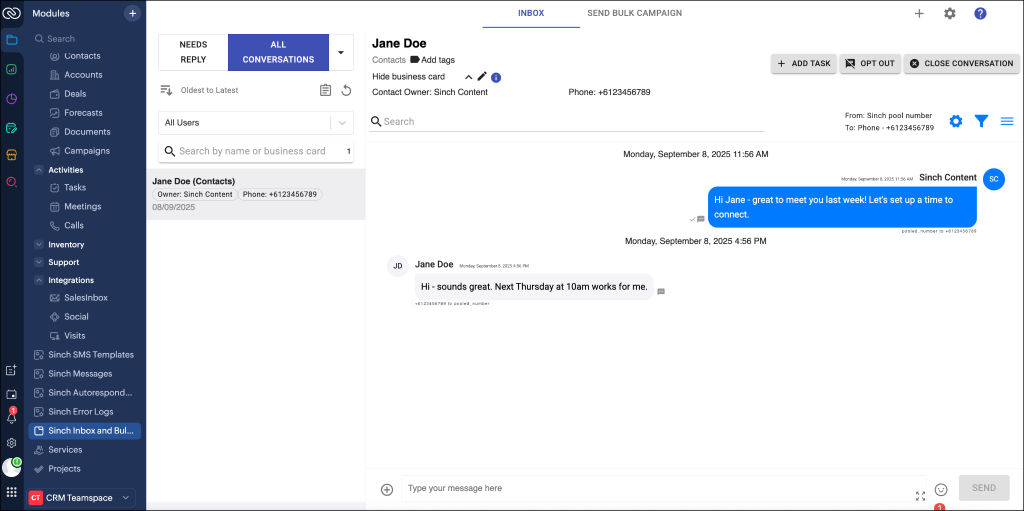
Sinch Conversation API connects to 14 messaging channels through a single integration for one- and two-way conversations. It handles automatic transcoding per channel and reroutes messages to the best available channel through channel priority and fallback.
The API includes Smart Conversations for AI analysis of intent, sentiment, and images, and a built-in analytics dashboard that reports on traffic, cost, and delivery across every connected channel with no extra setup.
General features include:
- Multi-channel messaging: Reach customers on SMS, WhatsApp, RCS, Facebook Messenger, and more through one API.
- Channel priority and fallback: Reroute to the best available channel when the preferred one does not work.
- Smart Conversations: Apply AI to detect intent and sentiment, mask PII, and identify harmful language.
- Templates and scheduling: Use Omnimessage templates and message batching and scheduling.
- Consent and routing: Manage opt-ins and compliance and handle inbound and status events through REST webhooks.
Analytics reporting features include:
- Unified omnichannel dashboard: View combined data from SMS, WhatsApp, RCS, and more in one interface.
- Traffic and delivery metrics: Track total messages, inbound and outbound volumes, and delivered versus failed rates.
- Cost analysis: Break down cost per message, channel, and country.
- Geographic insights: See message distribution across countries.
- Filtering, updates and export: Filter by app, date range, country, or channel, with data refreshed every 24 hours and CSV export.
Limitations (as reported by users on G2):
- Complexity for smaller teams: Some users find the platform complex for smaller businesses or those new to communications platforms.
- Pricing negotiation: Several users note that pricing often requires negotiation.
- Interface polish: Some reviewers describe the interface as basic and would prefer a more refined design.
Source: Sinch
Developer-First Communications API Platforms
4. Twilio
Best for: Developers building programmable multichannel messaging
Strengths: Broad APIs, real-time Messaging Insights, click tracking
Things to consider: Costs rise at scale; setup complex for non-technical teams
Twilio’s messaging platform lets applications reach customers on SMS, MMS, RCS, WhatsApp, and Facebook Messenger through its Programmable Messaging API and Conversations API, with the Verify API used for OTP-based two-factor authentication.
It runs on a network that monitors hundreds of millions of data points daily and applies real-time routing algorithms. Reporting is built into the console through Messaging Insights, which shows delivery health and troubleshooting data without extra code.
General features include:
- Multichannel APIs: Use the Programmable Messaging API and Conversations API across SMS, MMS, RCS, WhatsApp, and Messenger.
- Verified messaging and Trust Hub: Send over trusted routes and manage regulatory requirements to maintain deliverability.
- Real-time routing: Apply routing algorithms to optimize deliverability.
- Fraud Guard: Protect against SMS pumping and detect issues as they occur.
- Content and services: Build content with the Content Template Builder, manage sending with Messaging Services, and validate numbers with Lookup.
Analytics reporting features include:
- Real-time dashboards: Use the out-of-the-box Messaging Insights dashboard for delivery health and troubleshooting.
- Delivery and error views: Break delivery rates down by dimensions and analyze error codes.
- Link tracking: Apply Link Shortening with click tracking and click-through rates over time.
- Engagement and OTP data: Analyze responses and opt-outs and track OTP conversion.
- Scheduling and data access: Access advanced data and real-time dashboards through the Messaging Engagement Suite.
Limitations (as reported by users on G2):
- Cost at scale: Users note pricing can become expensive as usage grows, especially for SMS and WhatsApp, and billing across regions and channels can feel complex.
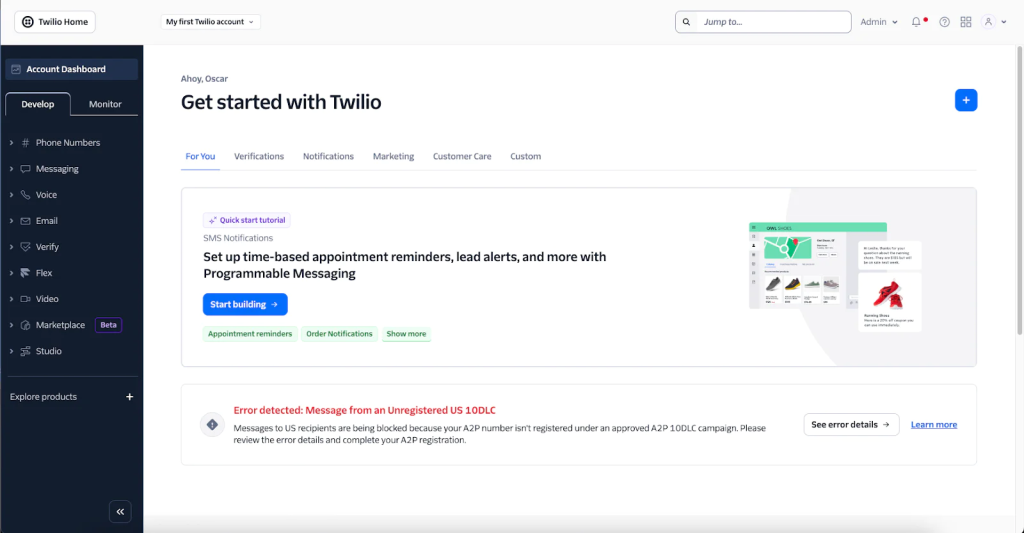
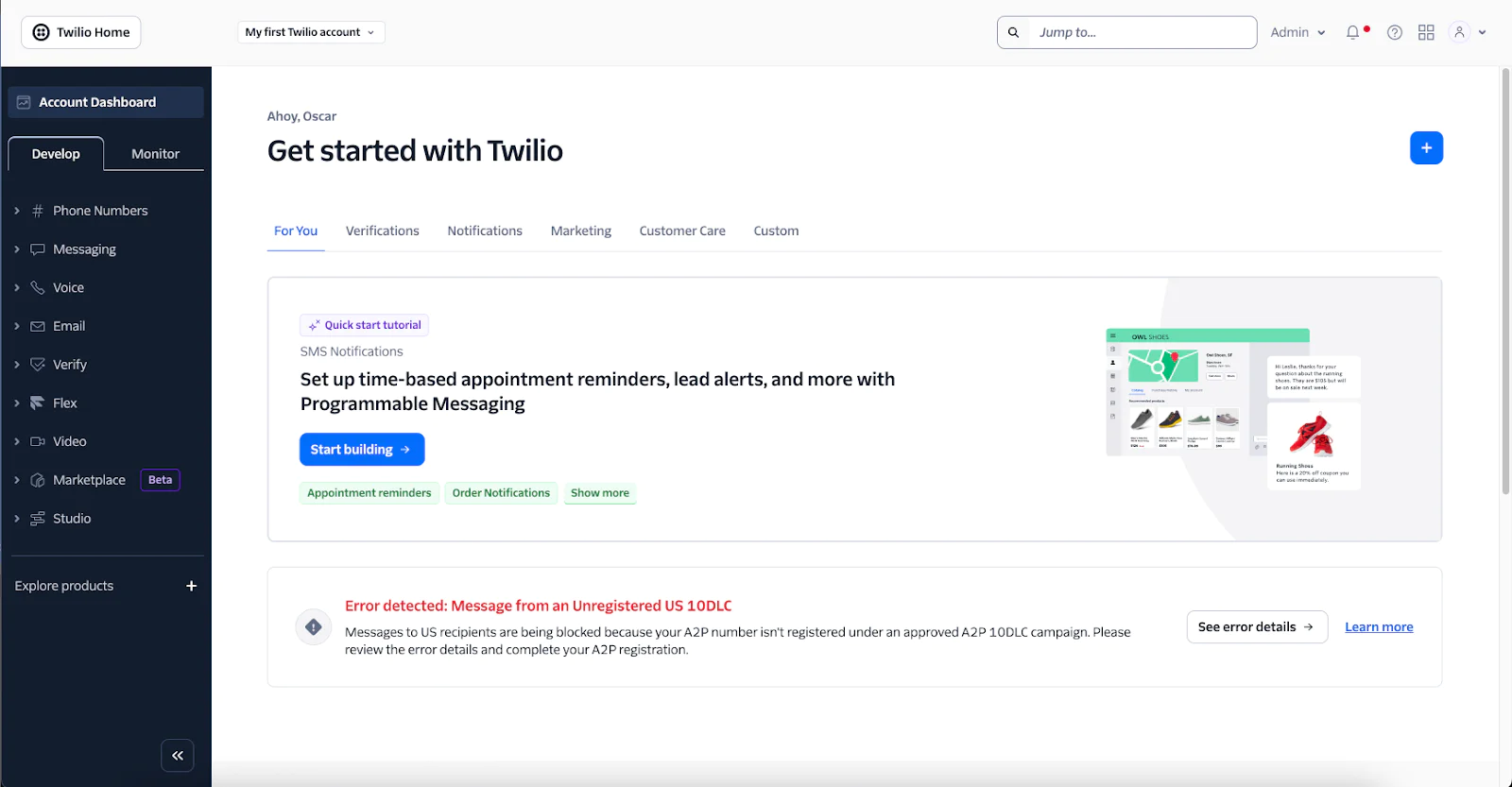
- Setup complexity: Initial configuration and A2P 10DLC registration can be difficult for non-technical teams, and advanced features require technical expertise.
- Support variability: Support response times vary by plan and can be slow for urgent issues.
Source: Twilio
5. Vonage
Best for: Programmable reporting across voice and messaging
Strengths: Single Reports API, 13 months of data, JSON/CSV, wide filters
Things to consider: Advanced features can be costly; dashboard fairly technical
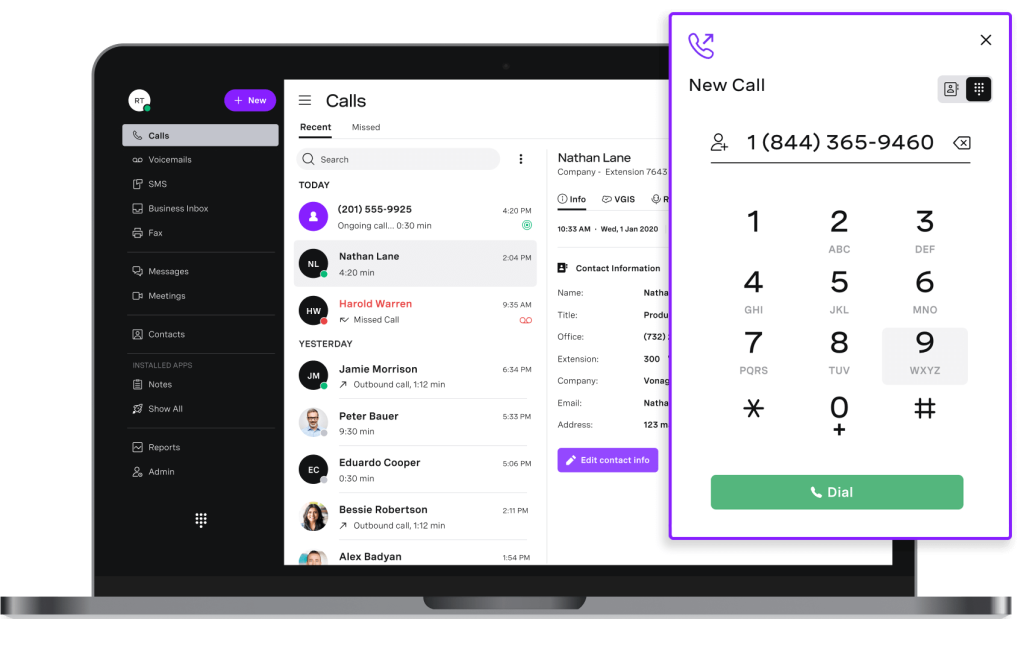
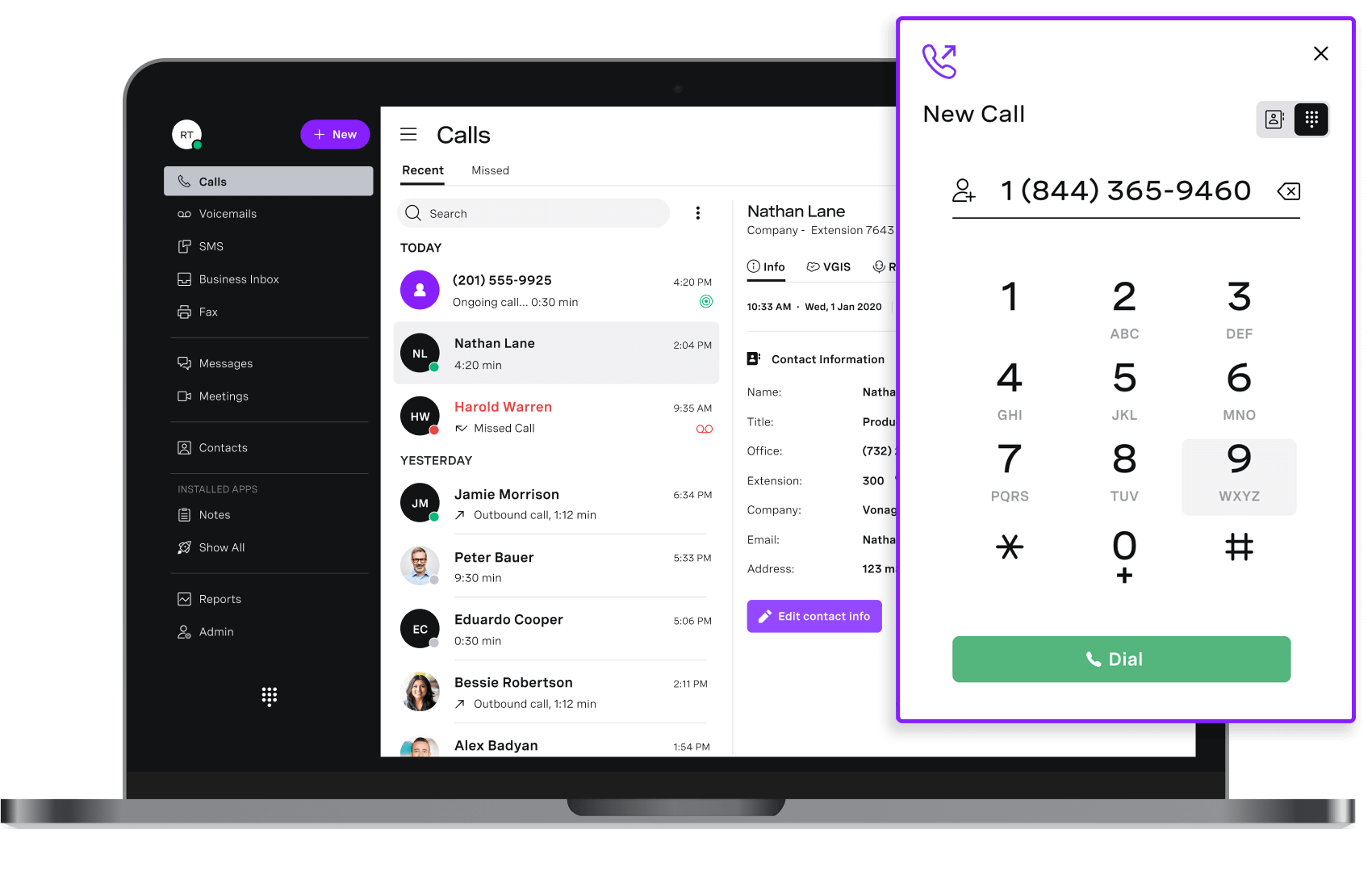
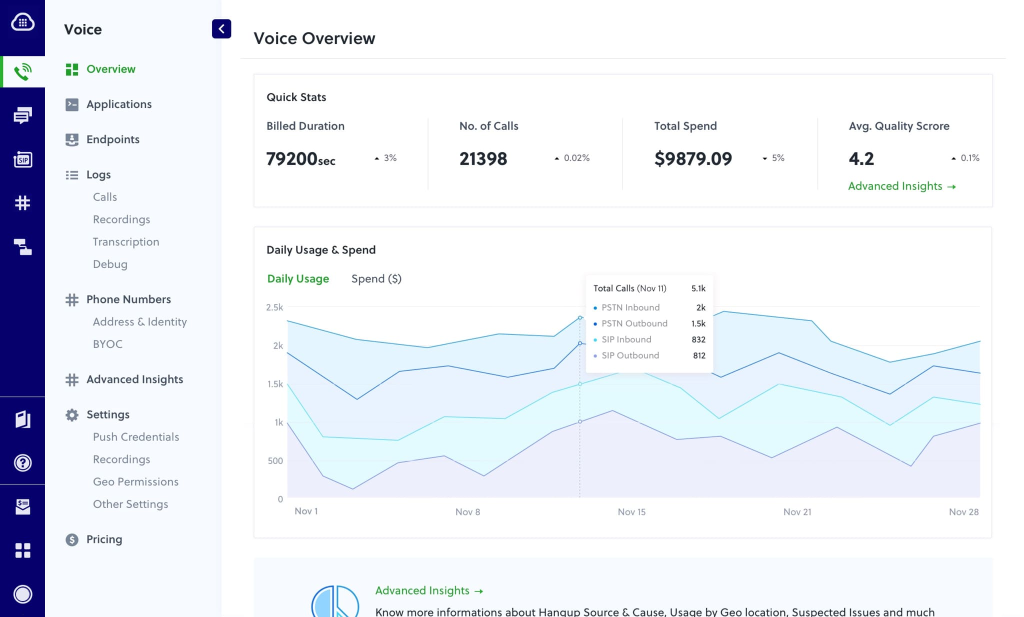
Vonage Communications APIs cover programmable voice, video, and messaging, and the Reports API provides a single programmatic interface to the data those products generate.
The Reports API consolidates records from the Messages API, SMS API, Verify API, Voice API, Video API, and Identity Insights, and integrates with existing analytics and business intelligence systems so teams can build their own dashboards and notifications.
General features include:
- Programmable channels: Add voice, video, and messaging through APIs with global network reach.
- Consolidated data access: Retrieve data from Messages, SMS, Verify, Voice, Video, and Identity Insights through one Reports API.
- Account management APIs: Use the Subaccounts API for asset allocation, activity reports, and billing.
- Data protection: Redact personal information with the Auto Redact API and review account events with the Audit API.
- Video insights: Access video session data through Advanced Insights.
Analytics reporting features include:
- Historical data access: Query up to 13 months of records for trend analysis.
- Flexible querying: Apply a wide range of filters and export in JSON (synchronous) or CSV (asynchronous) formats.
- Call detail records: Use CDR data for usage reporting, billing reconciliation, and campaign measurement.
- Delivery and status confirmation: Monitor delivery and intervene to maintain quality of service.
- BI integration: Feed communication data into existing analytics systems with programmatic reports and custom notifications.
Limitations (as reported by users on G2):
- Cost at scale: Users note that advanced features and per-usage charges can rise quickly for smaller budgets.
- Setup and learning curve: API integration can require testing, and error handling for edge cases could be better documented.
- Dashboard usability: Some users find the console technical when managing multiple numbers or reviewing logs and want clearer error messages.
Source: Vonage
6. Plivo

Best for: Reliable, cost-focused SMS and verification at scale
Strengths: Direct carrier network, ML fraud screening, campaign analytics
Things to consider: Dashboard can feel slow; report customization is limited
Plivo provides SMS and messaging for verification and customer engagement, reaching more than 190 countries through direct carrier connections. It supports OTPs with built-in FraudShield, alerts and notifications, and promotional and conversational messaging.
On top of the messaging APIs, Plivo offers a customer engagement suite with customer data and segmentation, automated journeys, and a no-code agent studio, along with integrations to systems such as Shopify, Salesforce, and HubSpot.
General features include:
- High-performance SMS: Send 10,000+ messages per second with sub-three-second latency through direct carrier connections.
- Verification and fraud prevention: Deliver OTPs with FraudShield and screen every message with ML-powered detection.
- Smart routing: Route each message based on real-time carrier performance.
- Engagement suite: Use customer data and segmentation, automation and journeys, and a no-code agent studio.
- Compliance and reliability: Meet GDPR, TCPA, HIPAA, SOC 2, and PCI DSS requirements with 99.99% platform uptime.
Analytics reporting features include:
- Engagement and performance analytics: Track open rates, click-through rates, and conversion performance.
- A/B testing: Test different message versions to compare results.
- Campaign analytics: Use campaign tools and analytics within the marketing suite.
- Segmentation insights: Unify customer data and build segments based on behavior and engagement patterns.
- ROI optimization: Measure ROI and optimize send timing across channels.
Limitations (as reported by users on G2):
- Dashboard performance: Some users report that the dashboard can be slow at times.
- Interface learning curve: Parts of the admin panel and some terminology are not always intuitive for new users.
- Report customization: A few users would like more customization options in the analytical reports.
Source: Plivo
7. Telnyx

Best for: Carrier-owned SMS with detailed delivery reporting
Strengths: Owned network, detailed delivery reports, automated optimization
Things to consider: Requires technical setup; support experiences vary
Telnyx offers an SMS and MMS API on its own carrier-grade network, supporting 10DLC, toll-free, short code, and alphanumeric sender IDs. It combines automated delivery optimization with detailed reporting.
The API handles automated message queuing, automatic opt-outs on stop words, message concatenation, and intelligent encoding to keep costs down. Reporting and monitoring are available through the Mission Control Portal and the API.
General features include:
- Global SMS/MMS API: Send and receive across 10DLC, toll-free, short code, and alphanumeric sender IDs.
- Automated message queuing: Manage throughput against account limits and current industry standards.
- Automatic opt-outs: Unsubscribe recipients automatically when they reply with a stop word.
- Message concatenation and encoding: Split long messages automatically and choose the most compact encoding to minimize cost.
- Hosted SMS: Send and receive on existing numbers without changing providers.
Analytics reporting features include:
- Delivery reports: Measure deliverability with detailed, transparent delivery reports.
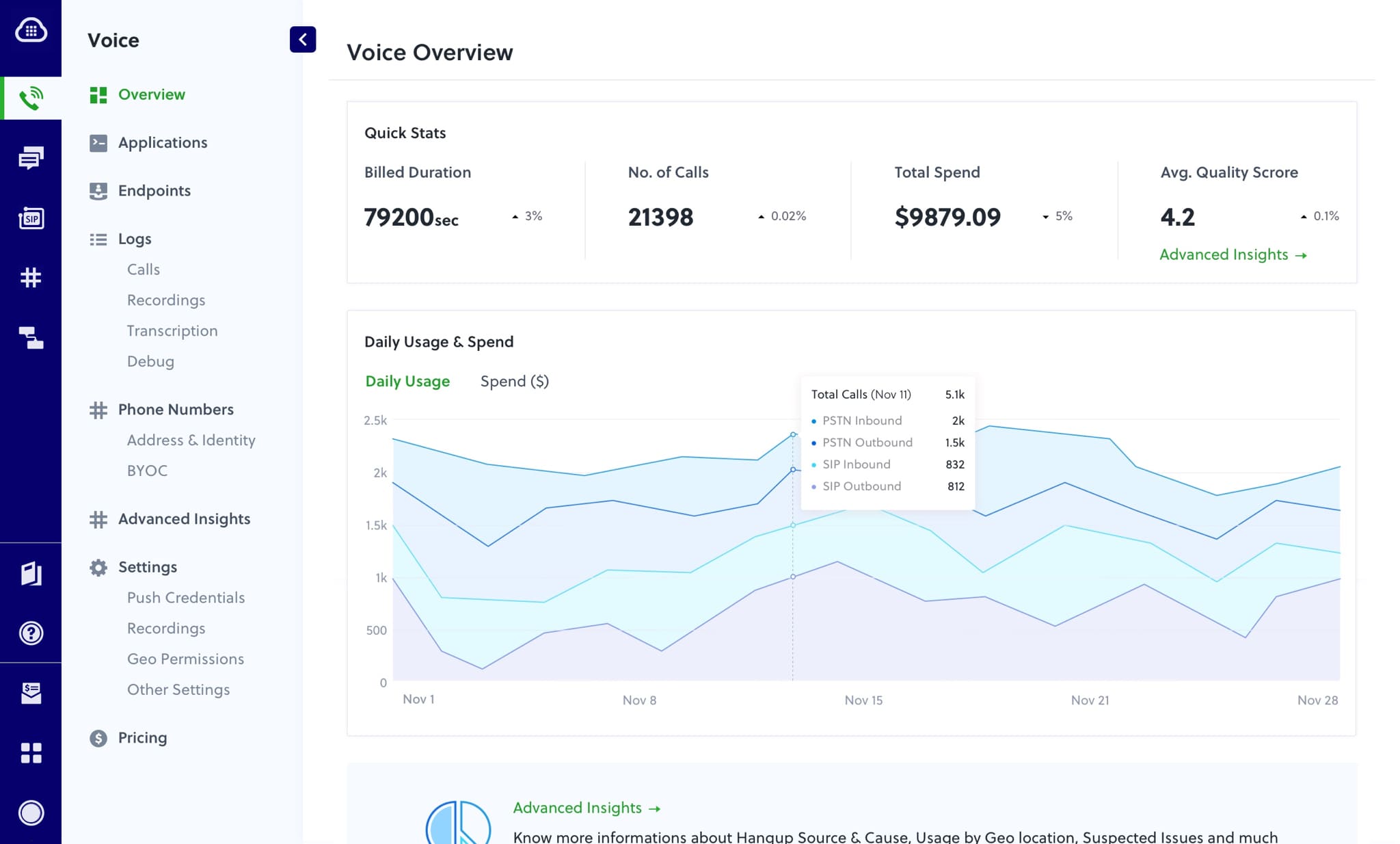
- Message deliverability dashboard: View delivered, undelivered, and in-flight messages by messaging profile, filtered by time range, number type, and message type.
- Usage reports: Retrieve aggregated messaging usage such as cost, parts, and count, broken down by dimensions like direction and carrier, via API or CSV.
- Message detail records: Generate MDR reports for historical messages.
- Debugging tool: Investigate delivery issues alongside the reports.
Limitations (as reported by users on G2):
- Technical setup: The platform is built for teams that want control, so non-technical users face more configuration than with drag-and-drop tools.
- Support experiences: Some users report difficulty reaching support and delays with account verification steps required before using the SMS API.
- Documentation depth: A few users note that operational details for advanced features can be hard to locate in the portal.
Source: Telnyx
8. Bandwidth

Best for: Enterprises on an owned network needing deep insights
Strengths: Owned network, real-time voice and messaging insights
Things to consider: Network focused on US/Canada; support and ticketing can lag
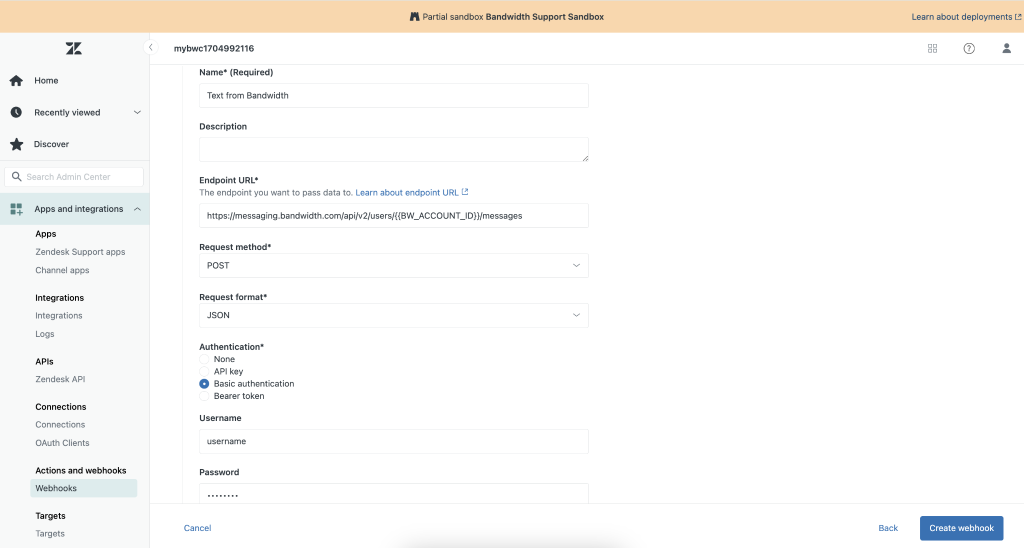
Bandwidth is a CPaaS provider that runs its own carrier-grade network and offers voice, messaging, emergency calling, and authentication APIs. Its analytics layer, Bandwidth Insights, provides near real-time voice and messaging performance data through the Bandwidth app.
Insights covers both messaging and voice, surfacing delivery and error data, latency, and call quality metrics, and adds machine-learning anomaly detection and configurable alerts so teams can act before problems reach customers.
General features include:
- Communication APIs: Use an all-in-one Messaging API for SMS, MMS, and RCS, plus Voice, Emergency Calling, WebRTC, and Authentication APIs.
- Owned network: Send and receive over a direct-to-carrier network that reaches 65+ countries.
- Number management: Provision and port phone numbers and manage caller ID.
- Fraud monitoring: Set custom call spend and volume alerts by threshold, country, and hour.
- Capacity management: Monitor calls per second and concurrency with alerts before limits are reached.
Analytics reporting features include:
- Messaging Insights: Access near real-time messaging logs and API status with error and delivery rates across carriers and products.
- Error and problem identification: Surface top errors and the most problematic phone numbers.
- Message latency monitoring: See how fast messages pass through the network.
- Voice quality metrics: Review mean opinion scores, round trip time, packet loss, and jitter, with call filtering.
- Alerts and anomaly detection: Configure health and error alerts and apply ML-based anomaly detection trained on historical patterns.
Limitations (as reported by users on G2):
- Geographic focus: The owned network is concentrated in the US and Canada, with limited presence in some rural and international markets.
- Support and ticketing: Some users describe support processes and the ticketing system as slow or cumbersome.
- Account focus: Reviewers note the platform is increasingly oriented toward larger and wholesale accounts, which can affect smaller customers.
Source: Bandwidth
Conclusion
Selecting a CPaaS provider with integrated analytics is essential for maintaining visibility over communication costs and performance. By leveraging real-time data, teams can proactively address delivery issues, optimize channel reliability, and enhance customer engagement. This foundation empowers organizations to build scalable, data-driven communication strategies that drive measurable results.