









TL;DR: CPaaS providers with multiple messaging channels reach customers across SMS, WhatsApp, RCS, email, and more from one API. Best for all-in-one business messaging: MessageWhiz; enterprise scale: Infobip; developer APIs: Twilio; global carrier reach: Sinch.
What Are CPaaS Providers with Multiple Messaging Channels?
CPaaS (Communications Platform as a Service) lets you add multiple messaging channels to your apps using simple code. Instead of building different tools for each app, you use one service to send on channels like SMS, WhatsApp, and email. This ensures customers get messages on the channel they prefer.
Multi-channel CPaaS solutions are designed to handle the complexity of delivering messages across diverse networks and devices. They abstract the technical details of each channel, providing consistent APIs and tools for developers. By centralizing communication infrastructure, these providers help organizations achieve better reliability, analytics, compliance, and scalability in customer engagement initiatives.
In essence, multi-channel CPaaS providers simplify how businesses orchestrate, track, and optimize their messaging strategies across a fragmented digital landscape.
CPaaS Providers at a Glance
The table below summarizes the key differences between the providers covered in this article. We explore each one in more detail in the sections that follow.
| Solution | Best For | Key Strengths | Channels Supported |
| MessageWhiz | Unifying SMS, chat, voice, and email in one platform | Multi-channel routing, GenAI text optimization, fast onboarding | SMS, RCS, Viber, Telegram, WhatsApp, Messenger, email, voice |
| Infobip | Enterprises needing global omnichannel messaging | Unified Messages API, 800+ carrier links, failover | SMS, MMS, RCS, WhatsApp, Viber, Telegram, LINE, Facebook Messenger, Instagram Messaging, Apple Messages for Business, KakaoTalk, Google Business Messages, email, voice, push notifications, in-app messaging |
| CM.com | Adding many OTT channels through one API | 10+ channels, automatic fallback, owned network | SMS, RCS, WhatsApp Business, Apple Messages for Business, Google Business Messages, Viber, Facebook Messenger, Instagram Messaging, Telegram, LINE, KakaoTalk, WeChat |
| Bird | Developer teams across email, SMS, WhatsApp, voice | One typed API, SDKs, test mode, large network | Email, SMS, MMS, RCS, WhatsApp, voice, Facebook Messenger, Instagram Messaging, Telegram, LINE, WeChat, Viber |
| Twilio | Building messaging into apps at global scale | SMS/RCS/MMS/WhatsApp APIs, deliverability tooling | SMS, MMS, RCS, WhatsApp, Facebook Messenger, Google Business Messages, in-app chat, email (via SendGrid), voice |
| Vonage | Embedding voice, SMS, and RCS via APIs | Messaging, Voice, Video, Verify APIs; 1,600+ networks | SMS, MMS, RCS, WhatsApp, Facebook Messenger, Viber, voice, video |
| Sinch | Global senders combining SMS, RCS, WhatsApp | Conversation API, 600+ carrier links, fallback | SMS, MMS, RCS, WhatsApp, Viber, KakaoTalk, Instagram Messaging, Messenger, LINE, WeChat, Telegram Bot, Sinch Push, Sinch Chat |
| Plivo | Adding SMS, voice, WhatsApp on a budget | SMS/voice/WhatsApp APIs, docs, direct routing | SMS, MMS (where supported), WhatsApp, Voice |
Why Businesses Need Multi-Channel Messaging CPaaS
Customers no longer rely on a single communication channel. They switch between SMS, messaging apps, email, and in-app notifications depending on the situation. A multi-channel CPaaS platform helps businesses manage these interactions from one place, improving customer experience while reducing the complexity of maintaining separate communication systems.
- Reach customers on their preferred channels: Engage users through SMS, WhatsApp, email, RCS, push notifications, or other supported platforms based on their preferences and availability.
- Increase message delivery rates: If one channel is unavailable or has lower engagement, businesses can automatically route messages through another channel to improve the chances of successful delivery.
- Create consistent customer experiences: Maintain the same messaging workflows, branding, and customer context across different communication channels.
- Support global communication: Connect with customers in different countries using the channels that are most widely adopted in each region.
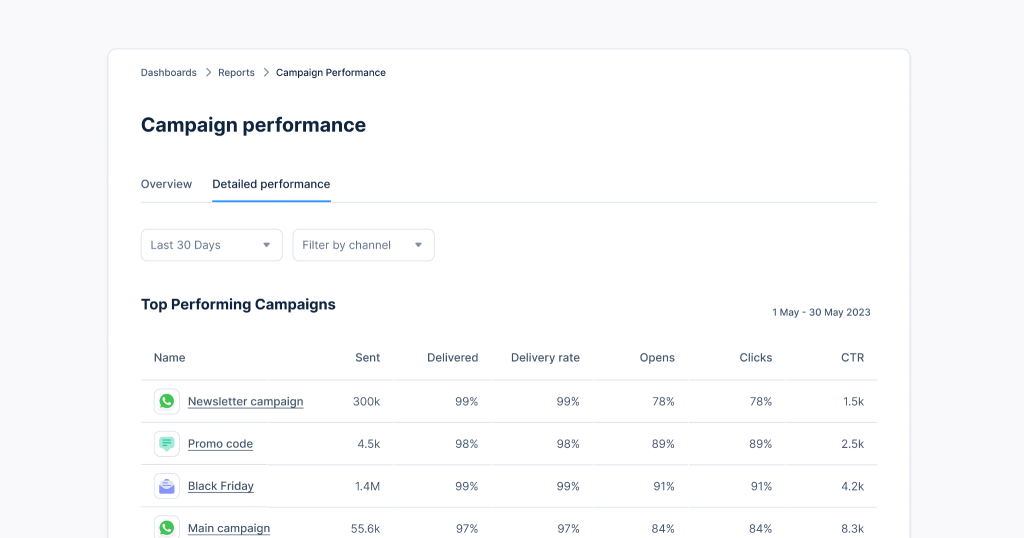
- Improve analytics and reporting: Track delivery status, engagement, response rates, and campaign performance across all messaging channels from a single dashboard.
- Automate customer journeys: Build workflows that combine multiple channels, such as sending an email first, following up with SMS, and escalating to WhatsApp if no response is received.
- Meet compliance requirements: Benefit from built-in tools for consent management, message logging, and regional messaging regulations supported by the CPaaS provider.
- Optimize communication costs: Select the most effective and cost-efficient channel for each use case while reducing the overhead of managing multiple messaging vendors.
Core Messaging Channels Offered by CPaaS Providers
SMS and MMS
SMS and MMS remain the most widely supported mobile messaging channels, making them a core part of nearly every CPaaS platform. SMS delivers short text messages for transactional and time-sensitive communications, while MMS adds support for images, videos, audio, and other multimedia content. CPaaS providers manage carrier connectivity, message delivery, compliance, and reporting through unified APIs, allowing businesses to send messages globally without building direct carrier integrations.
Common use cases
- Two-factor authentication (2FA) and one-time passwords (OTPs)
- Appointment reminders
- Delivery and order notifications
- Emergency alerts
- Promotional campaigns with images or coupons
- Customer surveys and feedback requests
WhatsApp Business Messaging
WhatsApp Business Messaging allows businesses to communicate with customers through the official WhatsApp Business Platform. CPaaS providers simplify integration by handling authentication, message templates, opt-in requirements, and delivery. Rich media, interactive buttons, and persistent conversations make WhatsApp suitable for both transactional and customer service interactions, particularly in regions where it is the dominant messaging platform.
Common use cases
- Customer support conversations
- Order confirmations and shipping updates
- Appointment scheduling
- Product recommendations
- Interactive marketing campaigns
- Account notifications and reminders
RCS Messaging
RCS (Rich Communication Services) enhances traditional SMS with interactive messaging features such as branded sender profiles, rich media, read receipts, suggested replies, and carousels. CPaaS providers abstract carrier and device differences so businesses can deploy RCS campaigns through the same APIs used for other messaging channels. When RCS is unavailable, many platforms automatically fall back to SMS.
Common use cases
- Interactive promotional campaigns
- Product catalogs and carousels
- Customer onboarding
- Delivery tracking
- Appointment confirmations
- Branded customer notifications
Email remains an essential business communication channel for both transactional and marketing messages. CPaaS providers integrate email into their messaging platforms through APIs that support template management, personalization, bulk delivery, analytics, and deliverability optimization. Combining email with other messaging channels enables businesses to coordinate customer communications from a single platform.
Common use cases
- Transactional receipts and invoices
- Password resets
- Marketing newsletters
- Product announcements
- Customer onboarding sequences
- Account statements and reports
Key Features to Look for in Multi-Channel CPaaS Providers
Unified Messaging APIs
Unified messaging APIs allow businesses to manage multiple communication channels through a single integration point. This simplifies development, reduces maintenance overhead, and enables faster deployment of new messaging features. With a unified API, developers can send messages, receive responses, and manage workflows across SMS, email, push, chat, and more, without handling each channel’s technical nuances separately.
A unified API also supports consistent data collection and analytics, making it easier to monitor performance across channels. CPaaS providers that offer well-documented, stable APIs help businesses remain agile as communication trends evolve. This centralized approach reduces integration errors and accelerates time-to-market for new campaigns and services, providing a scalable foundation for omnichannel engagement.
Channel Orchestration and Routing
Channel orchestration refers to the automated coordination of messaging across different channels, ensuring the right message is delivered through the most effective medium. CPaaS providers with orchestration capabilities allow businesses to define rules for fallback, escalation, or sequencing—such as sending an SMS if an email goes unopened. This increases the likelihood that messages are seen and acted upon by recipients.
Advanced routing features support dynamic decision-making based on user preferences, engagement history, or contextual triggers. CPaaS platforms may also offer A/B testing and intelligent delivery optimization, further improving campaign outcomes. By handling orchestration and routing within the platform, businesses can streamline workflows, reduce manual intervention, and maximize the effectiveness of every customer interaction.
Two-Way Messaging
Two-way messaging enables interactive communication, allowing recipients to respond to messages and engage in real-time conversations. CPaaS providers facilitate two-way messaging across channels like SMS, WhatsApp, and in-app chat, making it possible for businesses to conduct surveys, handle customer support, or confirm appointments directly within the messaging thread.
This capability is essential for building personalized, responsive customer experiences. CPaaS solutions manage session tracking, message threading, and context preservation, ensuring that conversations remain coherent across different channels and touchpoints. Two-way messaging also opens up opportunities for automation, such as chatbots or auto-responses, further enhancing customer engagement while reducing operational workload.
Compliance and Consent Management
Regulatory compliance is a critical concern for any business using messaging channels, especially given strict rules around privacy and consent. CPaaS providers offer built-in tools for managing opt-ins, opt-outs, and consent records across all channels, reducing the risk of legal violations. These features automate compliance with regulations like GDPR, TCPA, and CAN-SPAM, ensuring that only authorized communications are sent.
Consent management also includes tracking user preferences and managing suppression lists to prevent unwanted messages. CPaaS platforms provide audit trails, reporting, and customizable workflows to support compliance efforts. By centralizing these processes, businesses can maintain trust with their audience, avoid penalties, and quickly adapt to evolving legal requirements in different regions.
Templates and Campaign Management
Message templates help businesses create consistent communications while reducing the time required to launch campaigns. CPaaS providers typically offer template libraries, approval workflows for channels such as WhatsApp, and dynamic personalization using customer data. This allows organizations to reuse approved content for transactional notifications, promotional messages, and customer support while maintaining brand consistency.
Campaign management tools add scheduling, audience segmentation, and performance tracking to messaging workflows. Businesses can target specific customer groups, coordinate campaigns across multiple channels, and measure metrics such as delivery rates, open rates, click-through rates, and conversions. Centralized campaign management makes it easier to optimize messaging strategies and maintain consistent communication across every customer touchpoint.
Automation and Workflow Builder
Automation and workflow builders allow businesses to create communication flows without writing extensive custom code. Using visual workflow designers or programmable logic, organizations can define triggers, conditions, and actions that determine how messages move across channels. For example, a workflow can send an email confirmation, follow up with an SMS if it is not opened, and notify a support agent if the customer still does not respond.
These automation capabilities improve operational efficiency while delivering faster, more personalized customer experiences. CPaaS providers often integrate workflow builders with CRM systems, customer databases, and business applications so messaging can react to real-time events. Built-in monitoring, error handling, and analytics help businesses identify bottlenecks, refine customer journeys, and scale automated communications as demand grows.
Notable CPaaS Providers with Multiple Messaging Channels
How we selected these tools: We shortlisted CPaaS providers with multiple messaging channels based on their support for unified multi-channel messaging (SMS, RCS, WhatsApp, email, and chat apps), channel orchestration and fallback, API and developer tooling, global carrier reach, and compliance and analytics capabilities.
Multi-Channel Business Messaging Platforms
1. MessageWhiz by MMDSmart

Best for: Businesses unifying SMS, chat, voice, and email in one platform
Strengths: Multi-channel routing, GenAI text optimization, fast client onboarding
Channels supported: SMS, RCS, Viber, Telegram, WhatsApp, Messenger, email, voice
MessageWhiz by MMDSmart is a CPaaS platform that brings text, chat, voice, and email together in one cloud-based application. Text messaging covers multiple channels, so teams manage every conversation from a single view.
The platform routes each message through the channel and carrier path its engine identifies, with failover when a channel is unavailable. It provisions dedicated client environments through a single API request, assigning phone numbers and domains automatically, and monitors traffic in real time to flag fraudulent or bot activity.
Key features include:
- Unified API with smart routing: Connects to multiple channels through one API and applies intelligent failover to deliver messages through the most effective path.
- Client environment provisioning: Spins up tailored environments and onboards new clients as distinct entities with a single API request, auto-allocating numbers and domains.
- GenAI text optimization: Creates and tests multiple versions of a message to identify wording variants before sending.
- Two-way messaging and triggers: Supports two-way conversations with event and URL triggers and callbacks, plus recipient, unsubscribe, and sender list management.
- Client-level analytics: Provides consumption analytics and delivery metrics by client, with the option to subscribe to specific events such as delivery confirmations.
- System integrations: Connects to CRM platforms, support desks, and marketing automation tools through APIs and webhooks.
Limitations (based on publicly available sources):
- Platform language: The interface and support are documented in English, which may be limiting for teams that need localized dashboards.
- Independent review footprint: MessageWhiz has fewer public third-party reviews than the largest providers, so independent user feedback is more limited.
- Entry pricing: Published plans begin at a monthly fee, which can be higher than pure pay-as-you-go pricing for very low-volume senders.
2. Infobip

Best for: Enterprises needing global omnichannel messaging at scale
Strengths: Unified Messages API, 800+ carrier links, channel orchestration
Channels supported: SMS, MMS, RCS, WhatsApp, Viber, Telegram, LINE, Facebook Messenger, Instagram Messaging, Apple Messages for Business, KakaoTalk, Google Business Messages, email, voice, push notifications, in-app messaging
Infobip’s CPaaS X is a modular API stack built around a Messages API that unifies channels and chat apps under a single integration. The platform handles channel sequencing and failover logic, so a message can move to the next-best channel without editing content.
It also automates the operational side of running a communications platform, including client onboarding, number and domain provisioning, and client-specific consumption reporting. The network spans more than 80 offices and 800+ direct carrier connections, with local compliance support for expansion into new markets.
Key features include:
- Unified Messages API: Manages all channels through one API, making it possible to add new channels without separate integrations.
- Channel orchestration and failover: Handles sequencing and failover so clients reach customers on the best available channel, including SMS, RCS, and chat apps.
- Automated onboarding and provisioning: Adds new clients as individual entities with a single API call and provisions numbers and domains automatically.
- Granular client-level reporting: Delivers reports per client and lets teams subscribe to specific events such as delivery reports.
- Traffic monitoring: Detects fraudulent and bot-generated traffic and issues real-time alerts for early identification of issues.
- Global carrier reach: Uses 800+ direct carrier connections across many markets, with local compliance and legal support.
Limitations (as reported by users on G2):
- Support response times: Some users report that replies from support can take around three days, which affects time-sensitive campaigns.
- Reporting on failures: Reviewers note limited clarity when campaigns fail or are delayed, and ask for more real-time logs and automated failure alerts.
- Portal and interface: Some users describe the web portal as difficult to navigate for tasks such as updating payment details, and note infrequent UI updates.
- Account handling: A few reviewers mention different treatment between smaller and larger customers and price changes at renewal.
3. CM.com

Best for: Businesses adding many OTT channels through one messaging API
Strengths: 10+ channels, automatic fallback, privately owned network
Channels supported: SMS, RCS, WhatsApp Business, Apple Messages for Business, Google Business Messages, Viber, Facebook Messenger, Instagram Messaging, Telegram, LINE, KakaoTalk, WeChat.
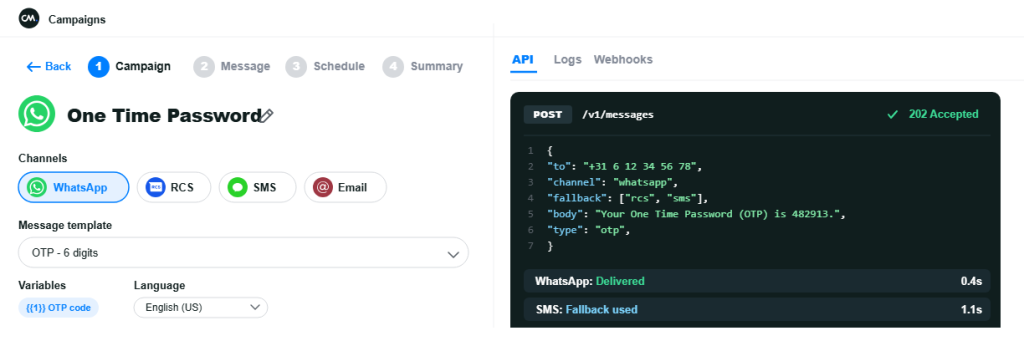
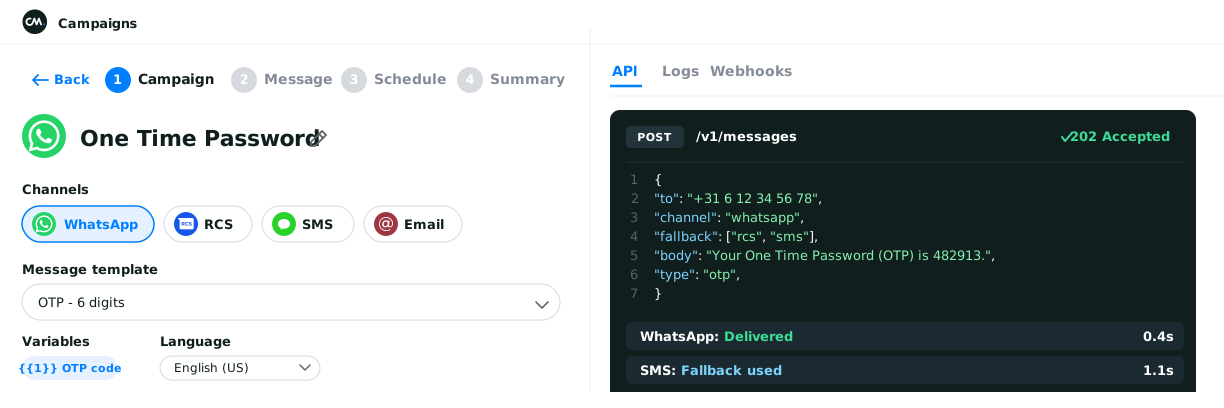
CM.com’s Connectivity Platform centralizes messaging through a single Business Messaging API that connects to channels including SMS, RCS, WhatsApp Business, Viber, and Apple Messages for Business. New channels and numbers can be requested, verified, and activated from the same API, and automatic channel fallback moves messages between channels.
The platform runs on privately owned, geo-redundant infrastructure with more than 1,000 connections globally, and a Channels dashboard lets teams view connected channels, add accounts, and track monthly active users. It supports common server languages such as PHP, Java, and C#, with real-time and historical analytics.
Key features include:
- Single Business Messaging API: Integrates multiple messaging channels into applications through one API for unified interactions.
- Automatic channel fallback: Requests, verifies, activates, and optimizes channels.
- Channels dashboard: Displays connected channels and accounts and provides insight into monthly active users.
- Owned infrastructure: Runs on a geo-redundant cloud platform with 1,000+ global connections and high-quality routing.
- Rich content and multi-language support: Adds rich content to messages and supports development in PHP, Java, and C#.
- Analytics: Provides real-time and historical reporting on worldwide traffic.
Limitations (as reported by users on Capterra):
- Interface feedback: Some users note the campaign interface lacks progress indicators, for example when uploading an image, which can require repeat attempts.
- Onboarding steps: Reviewers mention that certain setup steps, such as adding the address book app before uploading contacts, are not clearly signposted.
- Reporting structure: A few users ask for better grouping and categorization of data to extract reporting overviews.
- Regional coverage and cost: Some reviewers ask for wider country coverage for marketing and note that pricing can feel high relative to the service.
Source: CM.com
4. Bird

Best for: Developer teams sending email, SMS, WhatsApp, and voice via one API
Strengths: One typed API, SDKs, test mode, large carrier network
Channels supported: Email, SMS, MMS, RCS, WhatsApp, voice, Facebook Messenger, Instagram Messaging, Telegram, LINE, WeChat, Viber
Bird, formerly MessageBird, provides multiple messaging channels through one API and contract, running on a network that the company states carries a large share of the world’s commercial messages. It offers SDKs in TypeScript, Python, and Go, along with REST, a CLI, and a hosted MCP server for connecting AI coding tools.
Each channel shares the same underlying primitives, so authentication, idempotency, error handling, webhooks, and pagination behave consistently across channels. A test mode simulates delivery states, and per-channel webhooks are HMAC-signed and replay-protected.
Key features include:
- Unified multi-channel API: Sends and receives across email, SMS, voice, and WhatsApp through one API and contract.
- SMS with compliance handling: Files A2P 10DLC, alpha sender IDs, and DLT registration, applies smart routing per destination, and offers voice OTP fallback.
- WhatsApp Cloud API: Supports pre-approved templates, session messaging, interactive buttons and lists, and delivery and read receipts.
- Email infrastructure: Provides direct sending IPs, managed warm-up, ISP-aware routing, SPF/DKIM/DMARC handling, and suppression management.
- Developer tooling: Includes SDKs, a CLI, a hosted MCP server, test mode, and per-channel HMAC-signed webhooks.
- Voice: Offers programmable voice over PSTN and SIP with streaming text-to-speech and declarative IVR flows.
Limitations (as reported by users on G2):
- Pricing and fees: Some reviewers describe pricing as higher than expected, with region-based inconsistencies and concerns about additional fees.
- Support responsiveness: Users report slow or inconsistent support and friction around billing, cancellation, and refunds.
- WhatsApp setup: One reviewer notes that WhatsApp API access requires setting up and getting approval through a separate Meta account.
- Feature changes: A user reports that functionality for targeting sub-groups was removed, and others mention provider-imposed SMS content and volume limits.
Source: Bird
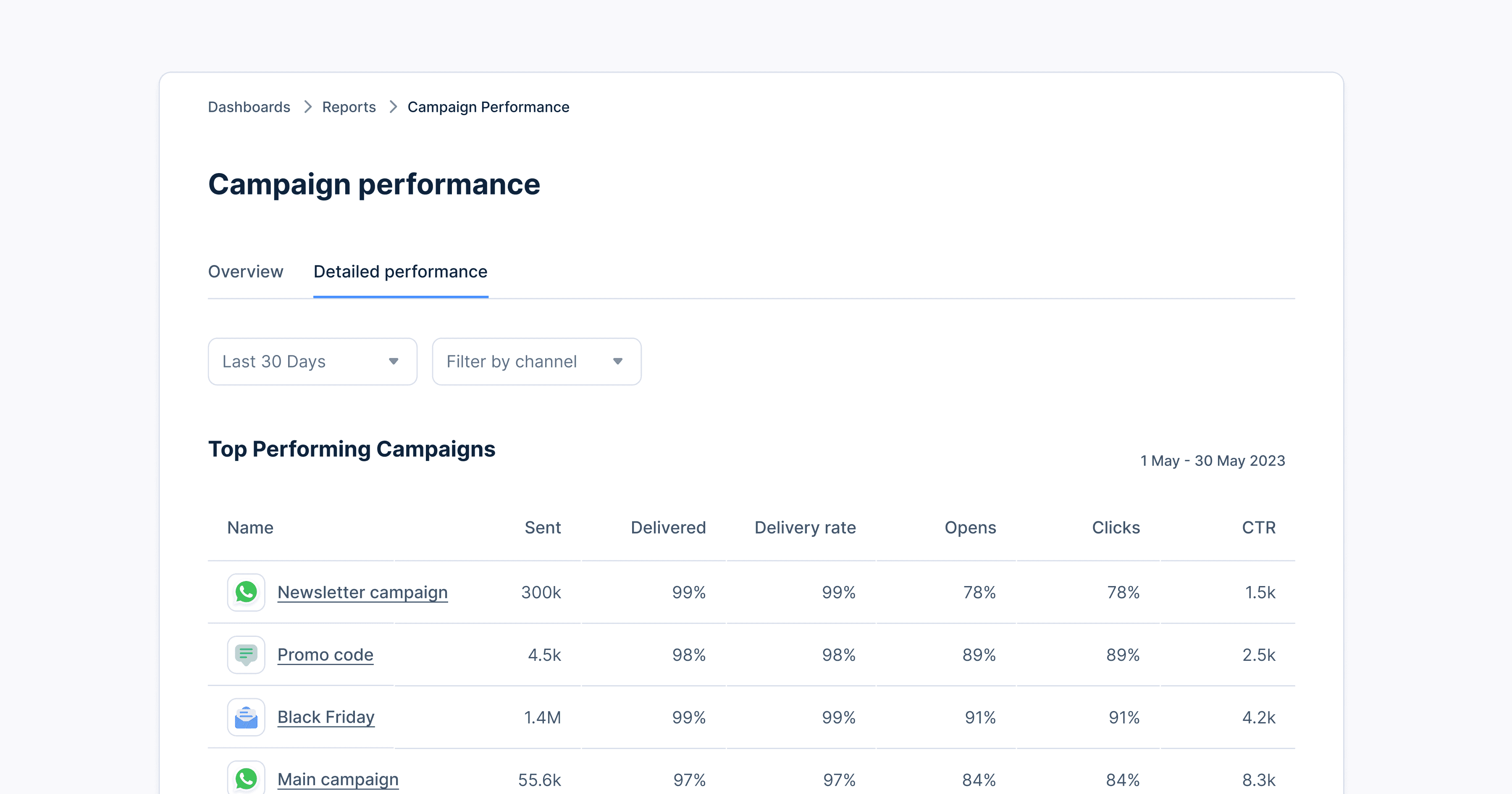
Developer-Focused Communication APIs
5. Twilio

Best for: Developers building messaging into applications at global scale
Strengths: SMS/RCS/MMS/WhatsApp APIs, deliverability tooling, documentation
Channels supported: SMS, MMS, RCS, WhatsApp, Facebook Messenger, Google Business Messages, in-app chat, email (via SendGrid), voice
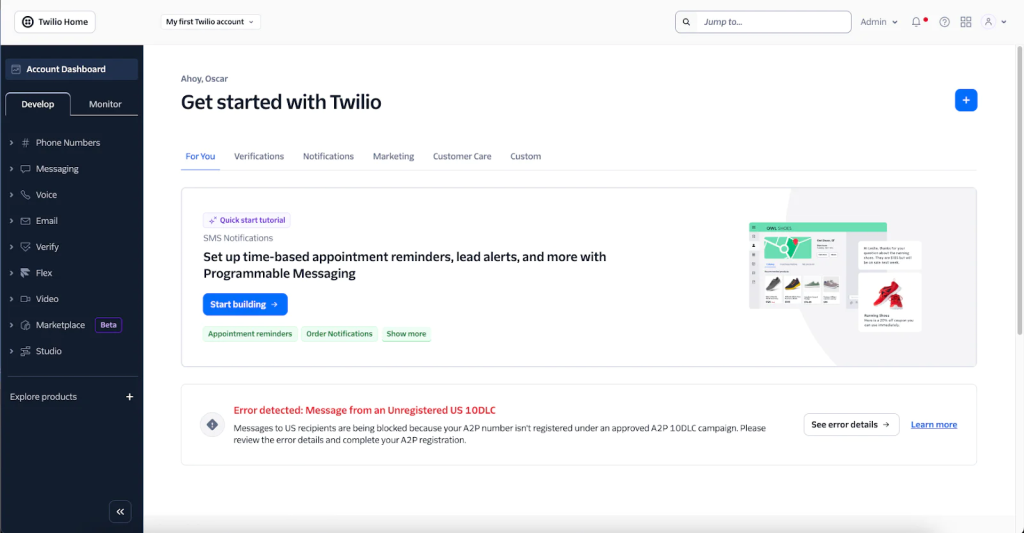
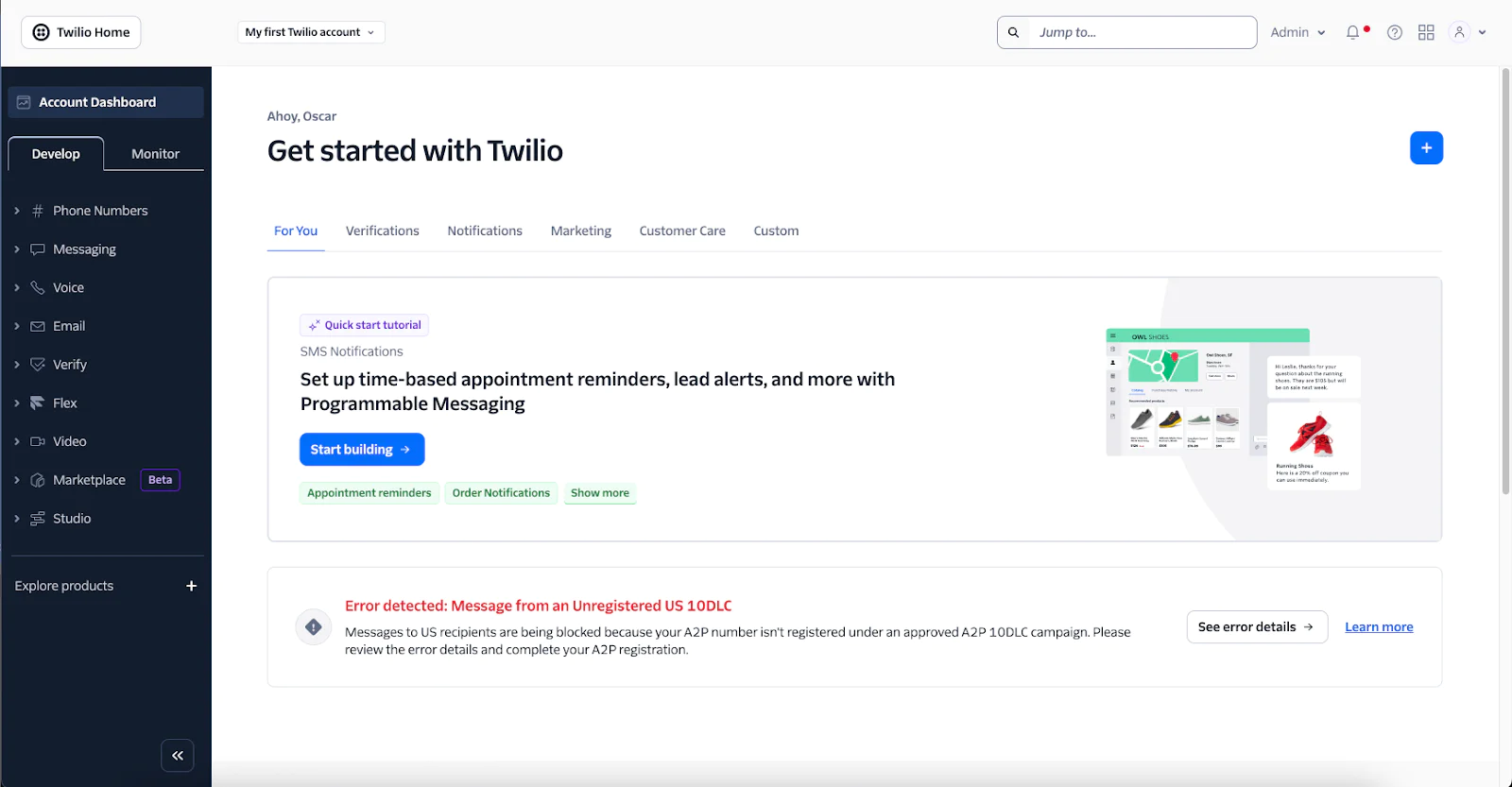
Twilio Messaging engages customers on various channels from a centralized platform, backed by a network that monitors a large volume of data points daily. Developers can use the Programmable Messaging API for alerts, notifications, and marketing, the Conversations API for customer care and commerce, and the Verify API for one-time passwords and two-factor authentication.
The platform includes tooling aimed at delivery health, including real-time routing, a Messaging Insights dashboard, and traffic optimization products, along with a broad set of carrier connections across many countries.
Key features include:
- Multichannel messaging: Reaches customers over different channels, including in-app chat, from one platform.
- Programmable and Conversations APIs: Builds notifications and marketing with Programmable Messaging and two-way care and commerce flows with Conversations.
- Verify API: Sends one-time passwords for two-factor authentication and fraud protection.
- Deliverability tooling: Applies real-time routing algorithms and provides Messaging Insights dashboards and traffic optimization products.
- Fraud Guard: Protects against SMS pumping and detects issues as they occur.
- Content Template Builder and Trust Hub: Manages templates across SMS, MMS, and WhatsApp and supports verified sender registration for compliance.
- Lookup: Validates phone numbers to reduce costs and improve conversion.
Limitations (as reported by users on G2):
- Cost at scale: Reviewers report that pricing can become expensive as usage grows, especially for SMS and WhatsApp, with billing that varies by region and channel.
- Onboarding complexity: Users describe the A2P 10DLC setup and initial onboarding as difficult, particularly for non-technical teams.
- Configuration effort: Some note that advanced features require deeper technical expertise to configure correctly.
- Support speed: Several reviewers say support response times could be faster for urgent issues.
Source: Twilio
6. Vonage

Best for: Teams embedding voice, SMS, and RCS through programmable APIs
Strengths: Messaging, Voice, Video, and Verify APIs; 1,600+ networks
Channels supported: SMS, MMS, RCS, WhatsApp, Facebook Messenger, Viber, voice, video
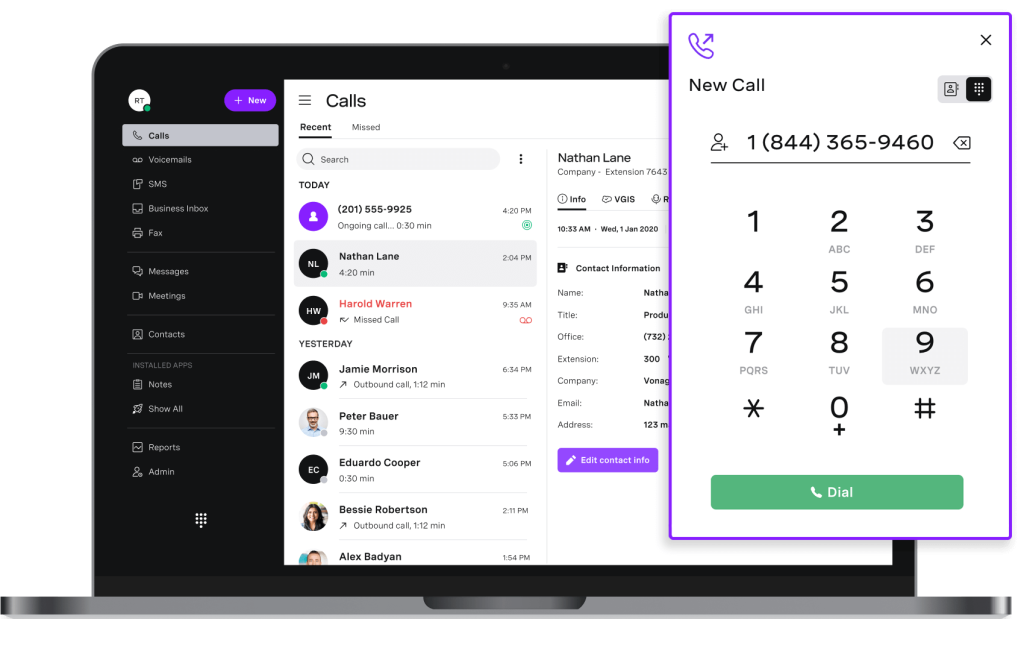
Vonage Communications APIs provide programmable messaging, voice, video, and verification. The Messaging API reaches customers across RCS, SMS, WhatsApp, and social channels with branded and omnichannel messaging, while the Voice, Video, and Verify APIs cover programmable calls, live video sessions, and two-factor authentication.
The platform connects to Vonage’s Tier 1 network and more than 1,600 telecommunications networks across nearly 200 countries, and offers no-code and low-code tools alongside a developer center and API dashboard.
Key features include:
- Messaging API: Reaches customers across texting and social channels with branded, omnichannel messaging.
- Voice API: Delivers programmable voice on a carrier-grade network.
- Verify API: Validates customers globally with two-factor authentication.
- Video API: Builds programmable and customizable live video sessions.
- Global reach: Connects to 1,600+ networks across nearly 200 countries.
- Developer and low-code tools: Provides a developer center, API dashboard, and no-code and low-code options.
- Protection Suite: Adds automated alerting and blocking plus two-factor authentication.
Limitations (as reported by users on G2):
- Cost at scale: Reviewers note that advanced features can be costly for startups and small budgets, and that pricing can rise quickly as usage grows.
- Learning curve and dashboard: Some describe a steep initial learning curve and a dashboard that feels too technical for managing multiple numbers or reviewing logs.
- Error handling and documentation: Users ask for more detailed error messages and documentation for edge-case scenarios.
- SMS callbacks and billing: One reviewer reports SMS status callbacks lacking metadata and correct timestamps, and others cite billing errors and cumbersome API key management.
Source: Vonage
7. Sinch

Best for: Global senders combining SMS, RCS, and WhatsApp via one API
Strengths: Conversation API, 600+ carrier links, automatic fallback
Channels supported: SMS, MMS, RCS, WhatsApp, Viber, KakaoTalk, Instagram Messaging, Messenger, LINE, WeChat, Telegram Bot, Sinch Push, Sinch Chat
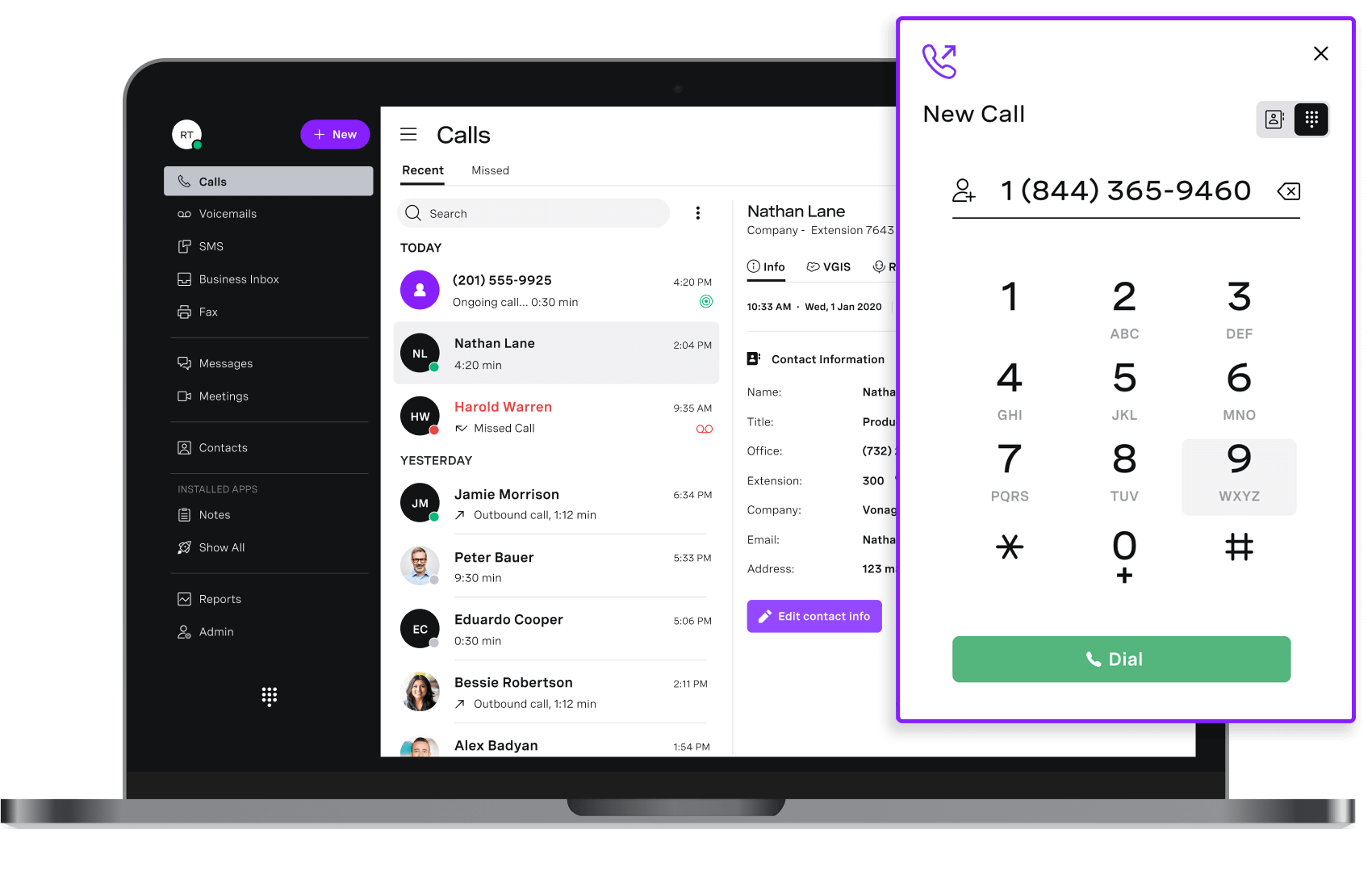
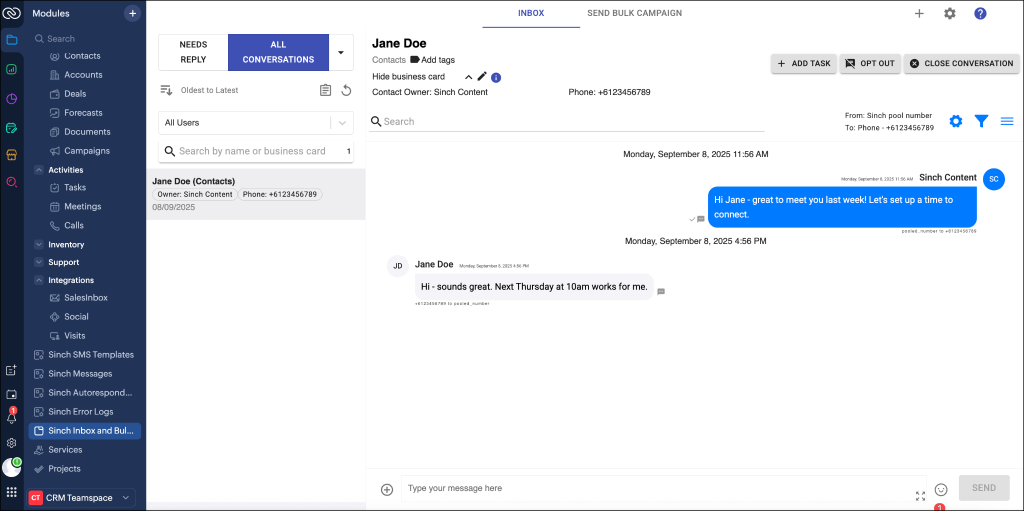
Sinch offers messaging APIs that reach customers on SMS, MMS, WhatsApp, RCS, and more through its Conversation API, which brings multiple channels together in a single integration. Smart Channeling provides automatic fallback, so a message that cannot land on a rich channel such as RCS or WhatsApp falls back to another channel like SMS.
The network runs on 600+ direct carrier connections across 190+ countries with a stated 99.95% SMS uptime, and includes consent tools, encryption, and audit trails alongside real-time detection of artificially inflated traffic.
Key features include:
- Conversation API: Combines channels through one unified integration.
- SMS and MMS APIs: Sends transactional and rich messages, including images, video, and longer text where supported.
- RCS for Business API: Delivers images, videos, carousels, quick replies, and verified business profiles.
- WhatsApp Business API: Centralizes chats, automates messages, and supports a verified WhatsApp account.
- Automatic fallback: Uses Smart Channeling to move messages between channels to maintain delivery.
- Global network: Provides 600+ direct carrier connections across 190+ countries.
- Compliance and fraud tools: Includes consent management, encryption, audit trails, and real-time detection of inflated traffic.
Limitations (as reported by users on G2):
- Support quality: Some reviewers describe support as slow or unhelpful and note a difficult user experience.
- Testing stage: One user reports difficulty testing the product and getting past the testing stage.
- Complexity: Reviewers note the platform can be complex for smaller businesses or users new to communications platforms, including a complex setup and hierarchy.
- API interface: A user points out there is no interface for the raw API, which can be challenging for those less proficient in programming.
Source: Sinch
8. Plivo

Best for: Developer teams adding SMS, voice, and WhatsApp on a budget
Strengths: SMS, voice, and WhatsApp APIs, documentation, direct carrier routing
Channels supported: SMS, MMS (where supported), WhatsApp, Voice.
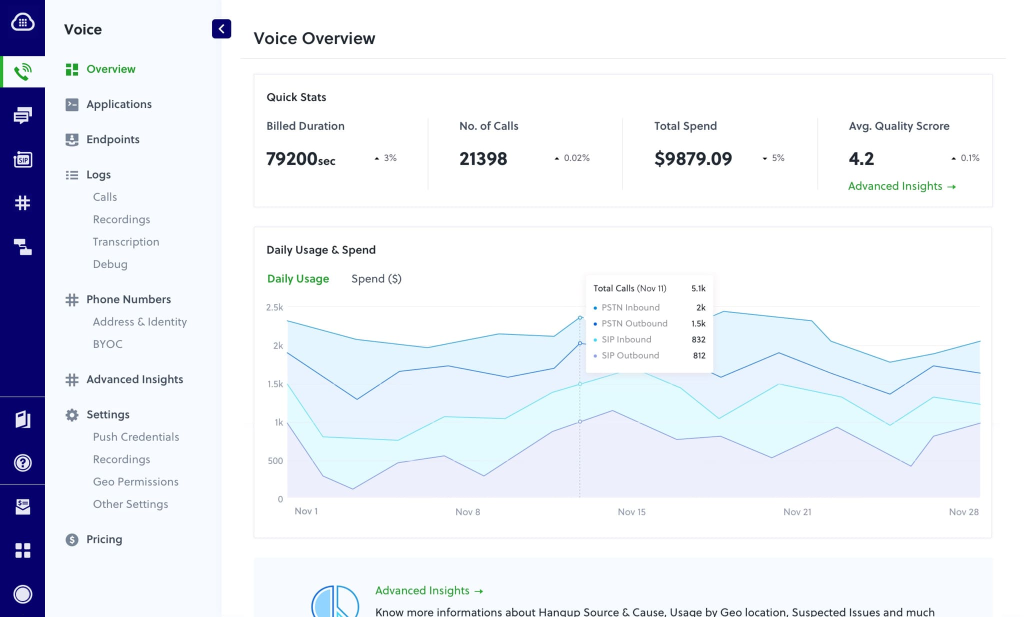
Plivo provides a CPaaS suite that includes an SMS API, Voice API, WhatsApp API, Verify API, and number masking, alongside a newer voice AI agent offering with a no-code builder. Its SMS service reaches customers across a large number of countries using direct carrier connections and smart routing, with FraudShield to limit SMS pumping.
The platform supports common use cases such as one-time passwords, alerts and notifications, promotional and loyalty campaigns, and conversational messaging, and it can provision numbers in 100+ countries. Developers can build with SDKs for Python, Node, and Go, or the REST API.
Key features include:
- SMS API: Sends messages across many countries with smart routing and direct carrier connections.
- Voice and WhatsApp APIs: Provides programmable voice, WhatsApp messaging, and voice AI agents with a no-code builder.
- Verify API: Delivers one-time passwords for authentication and verification.
- FraudShield: Sets country and hourly spending limits to limit SMS pumping and inflated costs.
- Number provisioning: Provisions local, national, mobile, and toll-free numbers in 100+ countries.
- Developer tooling: Offers SDKs for Python, Node, and Go, a REST API, and hosted activity logs.
- Compliance: Supports HIPAA, GDPR, SOC 2, and PCI DSS.
Limitations (as reported by users on G2):
- Support consistency: Support appears in both positive and negative feedback, with a notable share of users citing poor or slow customer support.
- Interface: Some reviewers find the interface not intuitive and note that advanced settings can be hard to locate, especially for non-coding users.
- Messaging issues: Users report limitations accessing SMS logs and occasional messages that did not reach recipients.
- Pricing transparency: Several reviewers mention costs being higher in certain regions and additional fees that are not obvious at the headline rate.
Source: Plivo
Conclusion
By centralizing communication across various channels, businesses can create more resilient, responsive, and data-driven customer experiences. Adopting the right multi-channel messaging platform helps streamline operations, simplify global scaling, and ensure compliance. This strategic approach transforms how brands connect with their audience, turning fragmented interactions into cohesive, automated, and impactful engagement journeys.