









What Is a Call Center Solution for Small Business?
Top call center solutions for small businesses in 2026 include Call Center Connect powered by MMDSmart for omnichannel communication, Nextiva for built-in CRM features, and RingCentral for automation. These cloud-based systems offer affordable, scalable tools like live answering, call routing, and CRM integration without complex hardware, often supporting remote teams.
Key features for small businesses:
- Cloud-based (CCaaS): Eliminates the need for expensive, on-premise hardware and maintenance costs.
- AI-powered analytics: Offers real-time insights to improve agent efficiency and customer satisfaction.
- Omnichannel support: Connects calls, emails, chats, and SMS in a single interface.
- Easy integration: Connects with existing CRM systems (e.g., Salesforce, HubSpot) and productivity tools (e.g., Slack, Microsoft Teams).
- Scalability: Allows businesses to add or remove seats instantly as needs change.
Cost considerations:
- Software-only: Generally operates on a per-user/per-month subscription model.
- Outsourced agents: Basic answering services can cost around $20 per hour, while specialized technical support is more premium.
- Pricing models: Pay-as-you-go or monthly, per-minute packages are common for small business budgets
Why Small Businesses Need Call Center Software
Small businesses often operate with limited staff and resources, making it difficult to manage customer communication. As customer expectations for fast and reliable support grow, relying on basic phone systems or manual processes can lead to missed calls, slow response times, and inconsistent service.
Call center software helps:
- Handle higher call volumes efficiently: Call center software distributes calls automatically, reducing wait times and preventing agents from becoming overwhelmed.
- Improve customer response times: Features like intelligent call routing and IVR direct customers to the right department faster.
- Support remote and hybrid teams: Cloud-based platforms allow agents to work from anywhere using internet-connected devices.
- Centralize customer communication: Solutions combine voice, email, chat, and messaging into one platform so agents can manage conversations from a single interface.
- Reduce operational costs: Cloud call center software eliminates the need for hardware and maintenance. Subscription-based pricing makes costs more predictable.
- Track performance with analytics: Reporting tools provide data on call volume, wait times, agent productivity, and customer satisfaction.
- Enhance customer experience: Faster support and personalized interactions help build customer trust and loyalty.
- Scale as the business grows: Businesses can add users, channels, and features as demand increases.
- Automate repetitive tasks: Automation handles tasks like call distribution, voicemail management, and follow-up reminders.
- Maintain professional communication standards: Features such as call recording, quality monitoring, and scripted workflows help ensure consistent customer interactions.
Key Features of Call Center Solution for Small Businesses
1. Cloud-Based (CCaaS)
Cloud-based call center solutions, often referred to as contact center as a service (CCaaS), provide small businesses with a flexible and cost-effective alternative to on-premises systems. With CCaaS, call center functions are hosted in the cloud, enabling businesses to deploy and manage operations from anywhere with an internet connection. This model eliminates the need for hardware and complex maintenance.
Cloud-based solutions support remote work:
- Agents can log in from any location, and managers have real-time visibility into operations.
- Automatic updates and security patches are handled by the service provider, reducing the risk of downtime and helping maintain compliance with industry standards.
- For small businesses, this results in lower costs and easier scaling.
2. AI-Powered Analytics
AI-powered analytics in call center solutions help small businesses gain insights into customer interactions and agent performance. These tools use machine learning to identify patterns in conversations, detect sentiment, and highlight common issues. By analyzing data, AI helps managers identify process improvements and prioritize customer concerns.
AI analytics can flag at-risk customers or suggest training opportunities for agents:
- Real-time dashboards and alerts keep managers informed.
- Predictive analytics can forecast call volumes or customer behavior.
- This supports more proactive customer service and data-driven decisions.
3. Omnichannel Support
Omnichannel support allows small businesses to interact with customers across phone, email, chat, SMS, and social media through a single platform. This approach keeps customer conversations consistent, regardless of the channel used. Agents can access the full history of customer interactions to provide informed support.
Customers expect responses on their preferred channels:
- Omnichannel support helps businesses respond quickly and maintain a professional presence.
- Automated workflows can route messages, prioritize urgent issues, and trigger follow-ups.
4. Easy Integration
Integration allows call center platforms to connect with existing tools like CRM systems, help desks, and productivity suites. Customer data syncs automatically, reducing manual entry and errors. Agents can view purchase history or previous tickets without switching between applications.
Most modern call center solutions offer pre-built connectors and open APIs:
- These make it simple to link with business applications.
- This allows businesses to align the platform with existing workflows and scale as needed.
5. Scalability
Scalability allows small businesses to add or remove users, channels, and features without major infrastructure changes. Businesses can start small and expand as needed, paying only for the resources they use.
Scalable solutions are also for growth and innovation:
- They allow businesses to test new channels or features.
- As needs evolve, companies can adapt their setup or automate additional processes.
- Scalability also helps in keeping costs under control.
Related content: Explore the top AI call center software options and their capabilities.
Call Center Solution Cost Considerations for Small Business
Software-Only
Software-only call center solutions provide a platform for managing customer communications without hiring external agents or investing in hardware. These solutions are typically subscription-based, with pricing based on the number of users, features, or call volumes. This model makes budgeting predictable.
Businesses should also consider training, upgrades, and integration costs. Software-only solutions suit small businesses that want to manage operations internally and maintain control over processes.
Outsourced Agents
Outsourcing call center operations involves contracting third-party agents to handle customer interactions. This model reduces overhead by eliminating the need to hire and manage in-house staff. Outsourced providers typically charge per minute, per call, or per agent.
Businesses may have less control over service quality, and aligning external agents with company processes can be challenging. Data security and compliance should also be considered when sharing customer information with third parties.
Pricing Models
Call center pricing models include per-user, per-month subscriptions, usage-based billing, and tiered feature packages. Per-user pricing allows businesses to pay based on the number of agents. Usage-based models charge based on call minutes or message volumes. Tiered packages bundle features at different price levels.
Businesses should review potential additional charges for integrations, premium features, or support. Understanding the pricing structure helps avoid unexpected costs as the business grows.
How to Choose the Best Call Center Solution for Your Small Business
Choosing the right call center solution starts with understanding how your business communicates with customers today and how those needs may change. A suitable solution should help your team manage conversations across channels, maintain continuity between agents, and use data to improve performance.
Platforms like Call Center Connect by MMDSmart focus on AI-powered communication, omnichannel engagement, real-time analytics, and support across channels such as WhatsApp, voice, email, RCS, SMS, Telegram, and Viber. Important considerations include:
- Identify your main communication channels: Choose a solution that supports the channels your customers use, such as phone, SMS, WhatsApp, email, or chat.
- Look for centralized conversation management: Agents should manage customer conversations in one place.
- Evaluate AI and automation capabilities: AI tools can analyze interactions and reduce repetitive manual work.
- Check analytics and reporting features: Review dashboards, delivery insights, and performance metrics.
- Consider scalability: Ensure the solution supports your current team size and future growth.
- Assess ease of use: An intuitive interface reduces onboarding time.
- Review integration options: The platform should connect with your CRM, marketing tools, or help desk.
- Prioritize reliability and uptime: Look for providers that emphasize stable infrastructure and availability.
- Check support and account management: Dedicated support can help small businesses without internal IT teams.
- Compare pricing against long-term value: Consider included channels, analytics, automation, support, and integrations.
- Ensure the platform supports both one-on-one and bulk communication: The solution should support individual conversations and larger outreach campaigns.
- Consider customer experience impact: The solution should help customers receive faster and clearer communication.
Notable Call Center Solution for Small Business
Messaging and Omnichannel Customer Communication Platforms
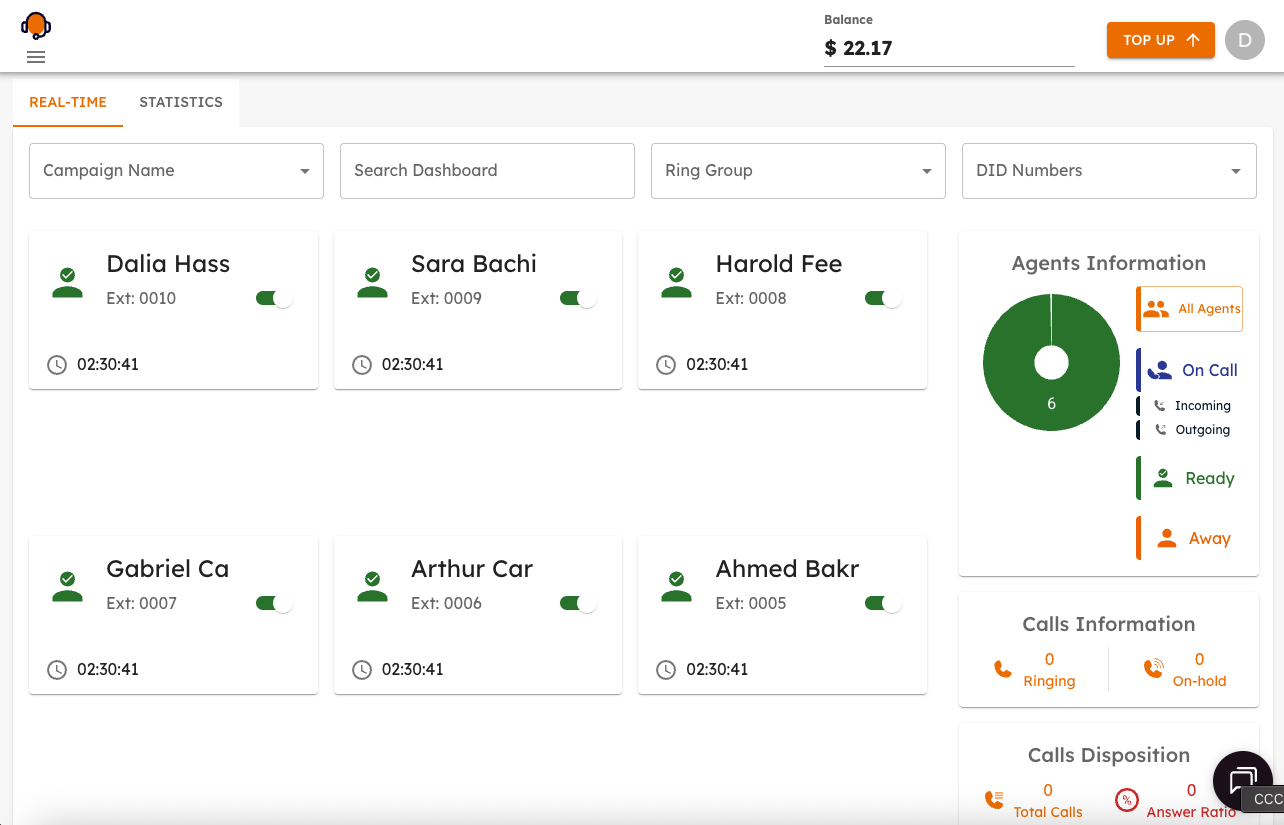
1. Call Center Connect by MMDSmart

Call Center Connect is a cloud-based call center platform, built by MMDSmart as a telecom transit operator, that helps businesses, BPOs, and global teams manage high-volume inbound and outbound voice operations without on-premises hardware. The platform connects voice with SMS, RCS, WhatsApp, Viber, Telegram, and email through the MMDSmart omnichannel platform, and it can link to a CRM, AI agent, or other management system to bring lead and customer context into every call.
Key features include:
- Omnichannel voice and messaging: Connects voice calling with SMS, RCS, WhatsApp, Viber, Telegram, and email so agents can work across channels from one system.
- Rapid virtual deployment: Businesses can spin up a virtual call center in minutes using a web-based agent workspace and WebRTC dialer, with no hardware or on-premises setup required.
- Flexible call operations: Supports automatic and manual dialing, IVR, robo-calls, voicemail drop, and on-screen lead details when linked to a CRM, AI agent, or other management system.
- Real-time supervision and analytics: Supervisors can monitor live calls through spy, whisper, or barge-in modes, supported by real-time dashboards and historical reporting on call volume, ASR, ACD, and disconnect reasons.
- AI-powered sentiment analysis: Provides real-time sentiment analysis during calls, along with post-call transcripts scored for sentiment.
2. Twilio Flex

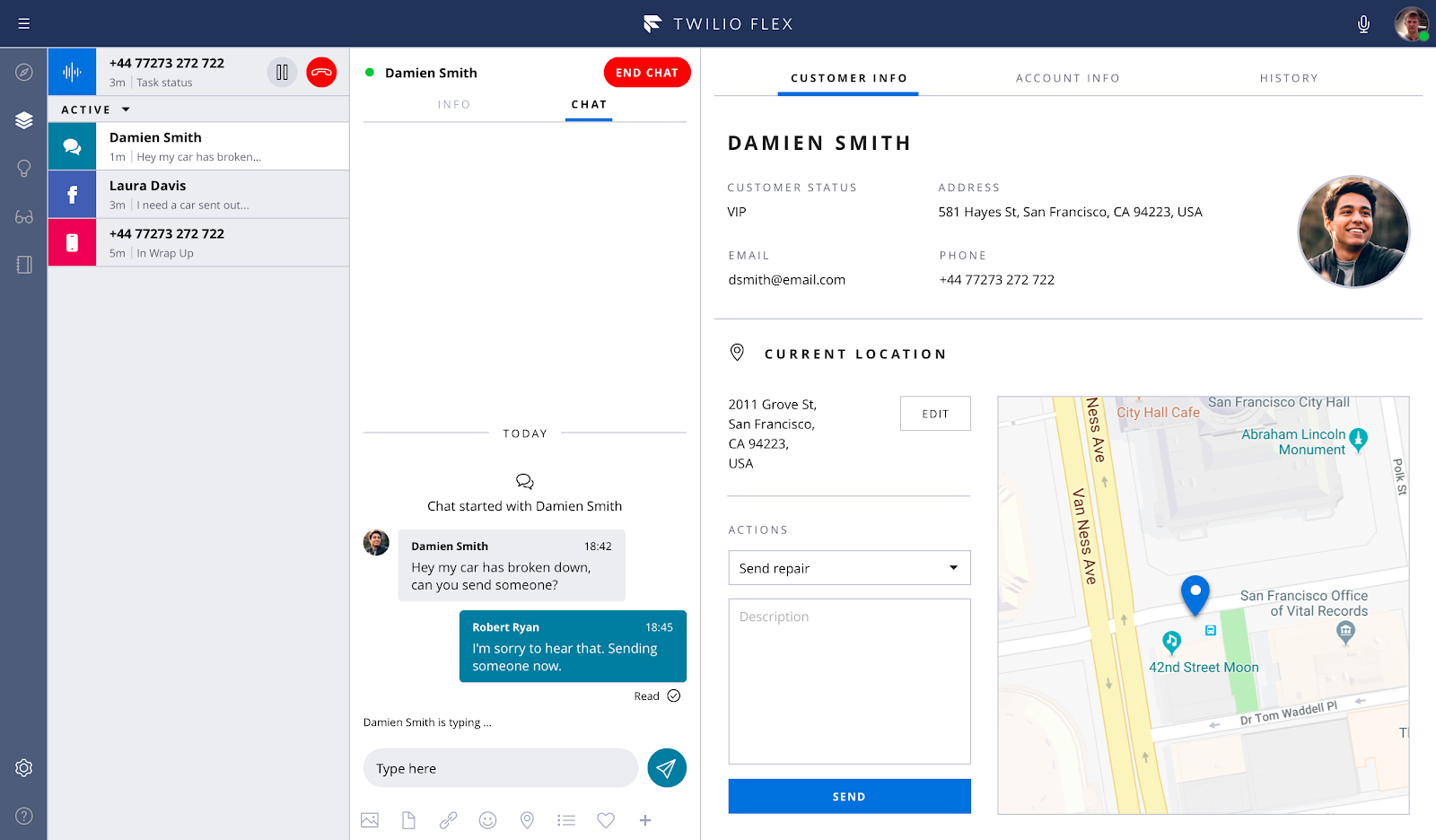
Twilio Flex is a cloud-based contact center platform that helps businesses manage customer communication across multiple channels from a single system. The platform combines voice, SMS, WhatsApp, web chat, Facebook Messenger, and other communication channels into one interface. Businesses can customize workflows, routing logic, reporting dashboards, and agent experiences to match their operations.
Key features include:
- Omnichannel customer engagement: Supports communication across voice, SMS, WhatsApp, Facebook Messenger, web chat, and other digital channels.
- Unified agent workspace: Agents handle conversations and customer data from a single interface.
- Customizable workflows and user interface: Businesses can tailor workflows, routing methods, dashboards, and agent interfaces.
- Task routing: The built-in TaskRouter assigns interactions based on skills or availability.
- AI-powered assistance: Integrates with Google contact center AI (CCAI) to provide recommended responses and AI support tools.
Source: Twilio
3. RingCentral Omnichannel

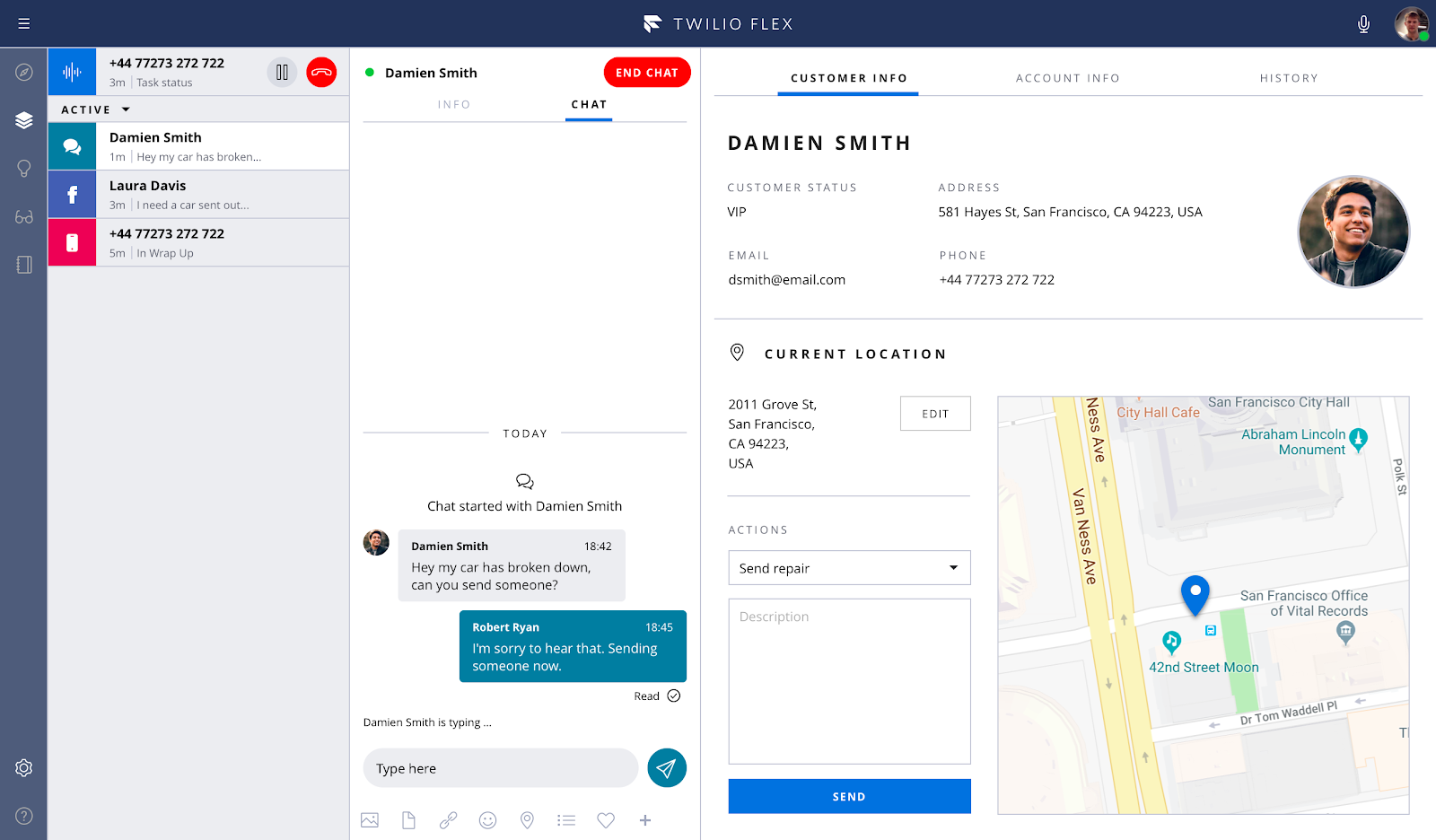
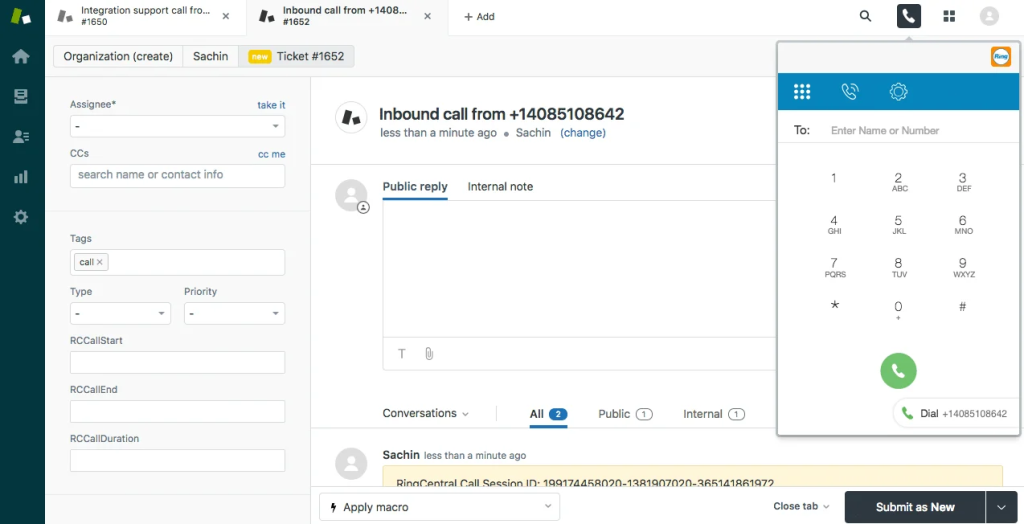
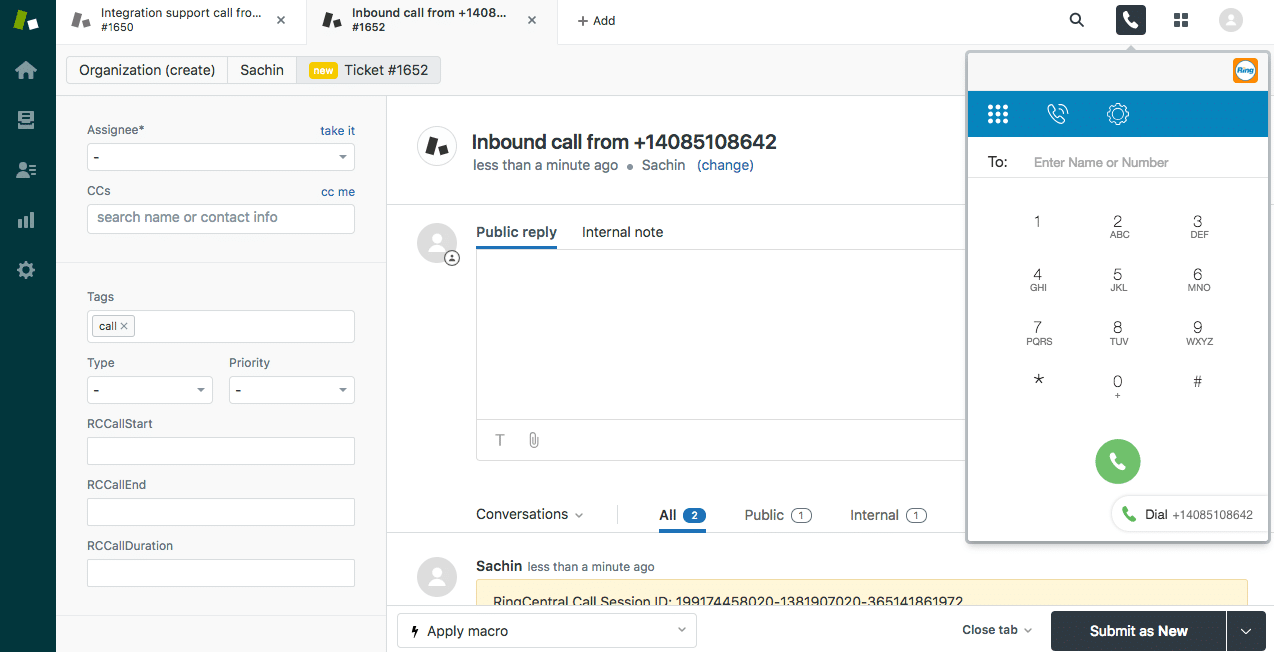
RingCentral Omnichannel is a cloud-based customer communication platform that helps businesses manage interactions across voice and more than 20 digital channels from a single workspace. The platform supports phone, chat, email, social media, messaging apps, and in-app messaging while maintaining a unified customer experience.
Key features include:
- Omnichannel customer communication: Supports voice, email, chat, text messaging, social media, messaging apps, and web-based channels.
- Support for 20+ digital channels: Includes WhatsApp, Apple Messages for Business, Facebook Messenger, Instagram direct messages, Google Business Messages, and other platforms.
- Social media customer support: Agents manage interactions on Facebook, X, Instagram, YouTube, and other platforms from one system.
- Unified agent workspace: Provides a centralized interface for conversations and customer information.
- CRM and omnichannel integrations: Integrates with CRM systems and business applications to provide customer history during interactions.
Source: RingCentral
Cloud Call Center Platforms
4. CloudTalk

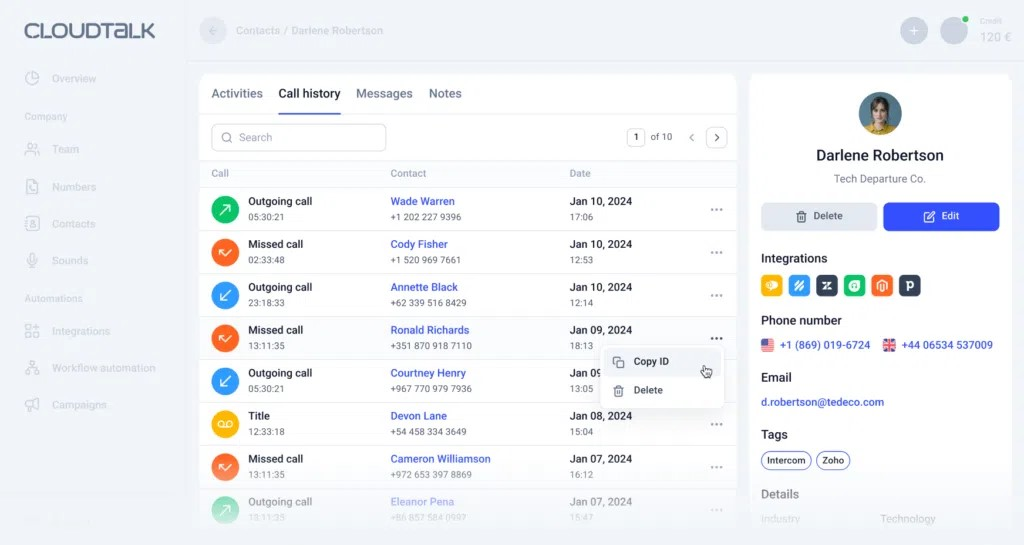
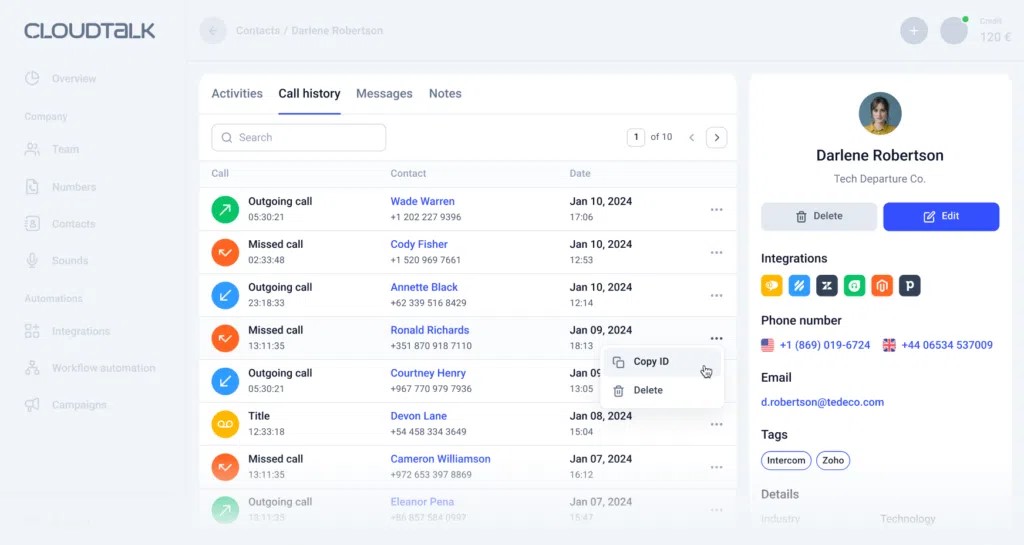
CloudTalk is a business calling platform that helps sales, support, operations, and recruiting teams manage customer communication. The platform combines voice infrastructure, AI voice agents, routing, messaging, analytics, and workflow automation in a cloud-based system. CloudTalk supports inbound and outbound communication across calls, SMS, and WhatsApp while integrating with business tools and CRM platforms.
Key features include:
- Global cloud calling infrastructure: Provides voice coverage in more than 160 countries.
- High availability and reliability: Includes redundant servers, multi-region backups, multiple carrier support, and 99.999% uptime.
- AI-powered voice agents: Automate routine inbound and outbound calls.
- Smart call routing: Directs calls based on conditions or agent availability.
- Inbound call management: Includes call queues, IVR menus, inbound AI agents, and routing workflows.
Source: CloudTalk
5. Nextiva Contact Center
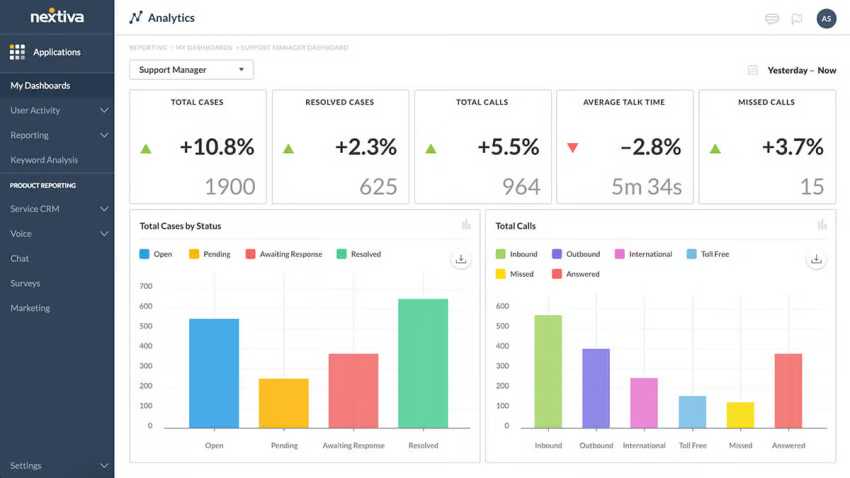
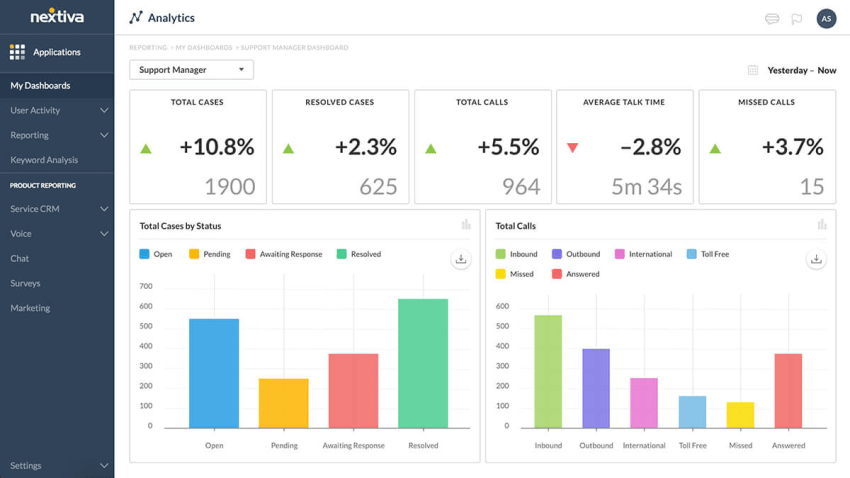
Nextiva Contact Center is an AI-powered omnichannel contact center platform that helps businesses manage conversations across voice, chat, messaging, email, and social media from one system. The platform combines communication tools, AI automation, analytics, and CRM integrations.
Key features include:
- Omnichannel customer communication: Supports voice, chat, messaging, email, social media, and digital channels in one platform.
- Unified agent workspace: Provides a centralized interface with communication channels and customer context.
- AI-powered contact center automation: Automates customer support tasks and reduces manual work.
- Advanced voice capabilities: Includes IVR, intelligent call routing, voice bots, and context-aware conversations.
- Digital channel support: Enables communication through chat, messaging apps, email, and social media.
Source: Nextiva
6. Freshdesk Contact Center

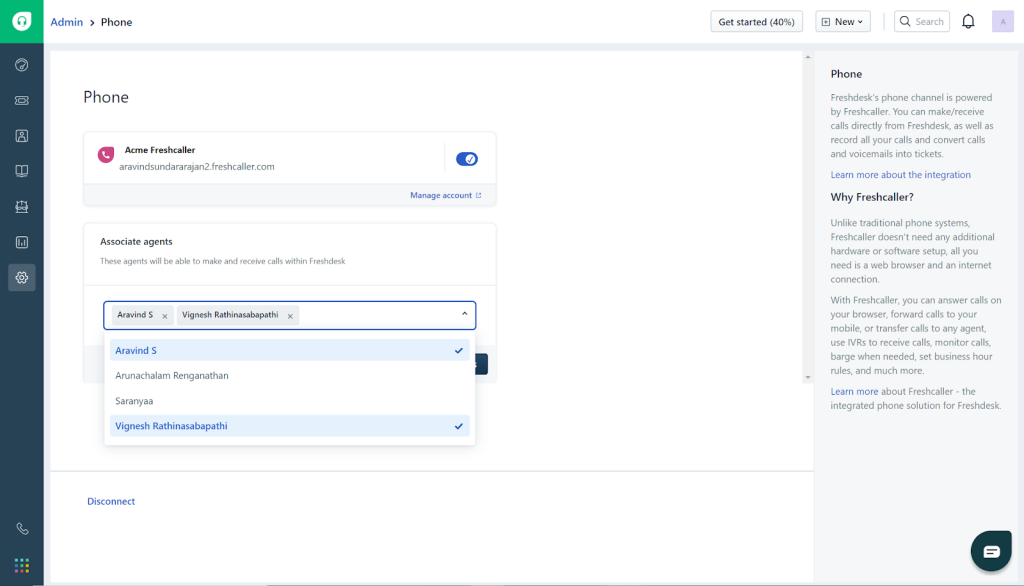
Freshdesk Contact Center is a cloud-based customer service platform that helps businesses manage support across multiple channels from one workspace. The platform combines omnichannel communication, AI automation, ticketing, workflows, and analytics. Freshdesk uses Freddy AI to automate support tasks and assist agents during conversations.
Key features include:
- Omnichannel customer support: Supports multiple communication channels within one connected platform.
- Centralized agent workspace: Provides a unified workspace for conversations, customer information, and support tools.
- Freddy AI automation: Automates customer service tasks and resolves repetitive queries.
- AI agents for automated resolution: AI agents resolve routine customer issues and process requests.
- Freddy AI copilot: Assists agents with summaries, reply suggestions, translations, and contextual recommendations.
Source: Freshdesk

Conclusion
Call center solutions designed for small businesses provide enterprise-grade communication capabilities without the cost and complexity of traditional on-premises systems. By combining cloud-based deployment, omnichannel communication, AI-powered analytics, automation, CRM integrations, and flexible pricing, these platforms help small teams deliver faster, more consistent customer service while operating more efficiently.